
Starting from:
$2.22
📄 LESSON 2.8 – Packet
Lesson 2.8 Worksheet Packet (PDF) — THE SOCIAL CONSTRUCTION OF "RACE"
Challenge students to critically examine the origins of "race" as a social construct with this 10-page worksheet packet for Unit 2 of the AP African American Studies course. Topic 2.8 traces how race emerged as a legal and ideological tool to justify slavery, examining the one-drop rule, the doctrine of partus sequitur ventrem, and landmark legal cases that codified race-based chattel slavery in colonial Virginia.
📝 What's Included:
- ✅ 10-page student worksheet packet (PDF + printable)
- 🖥️ Link to Editable version (Google Docs)
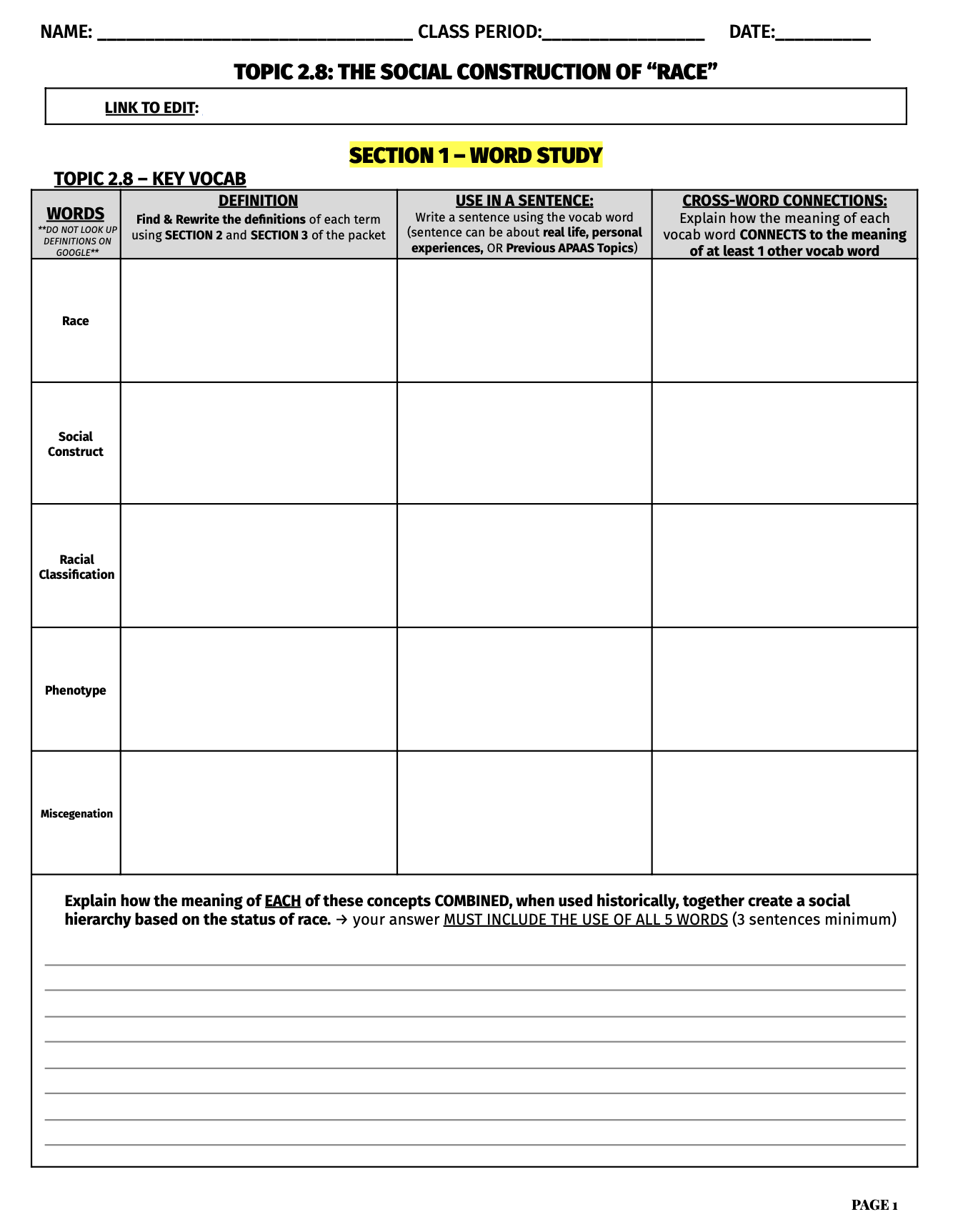
- 📚 Key vocabulary word study (race, social construct, racial classification, phenotype, miscegenation)
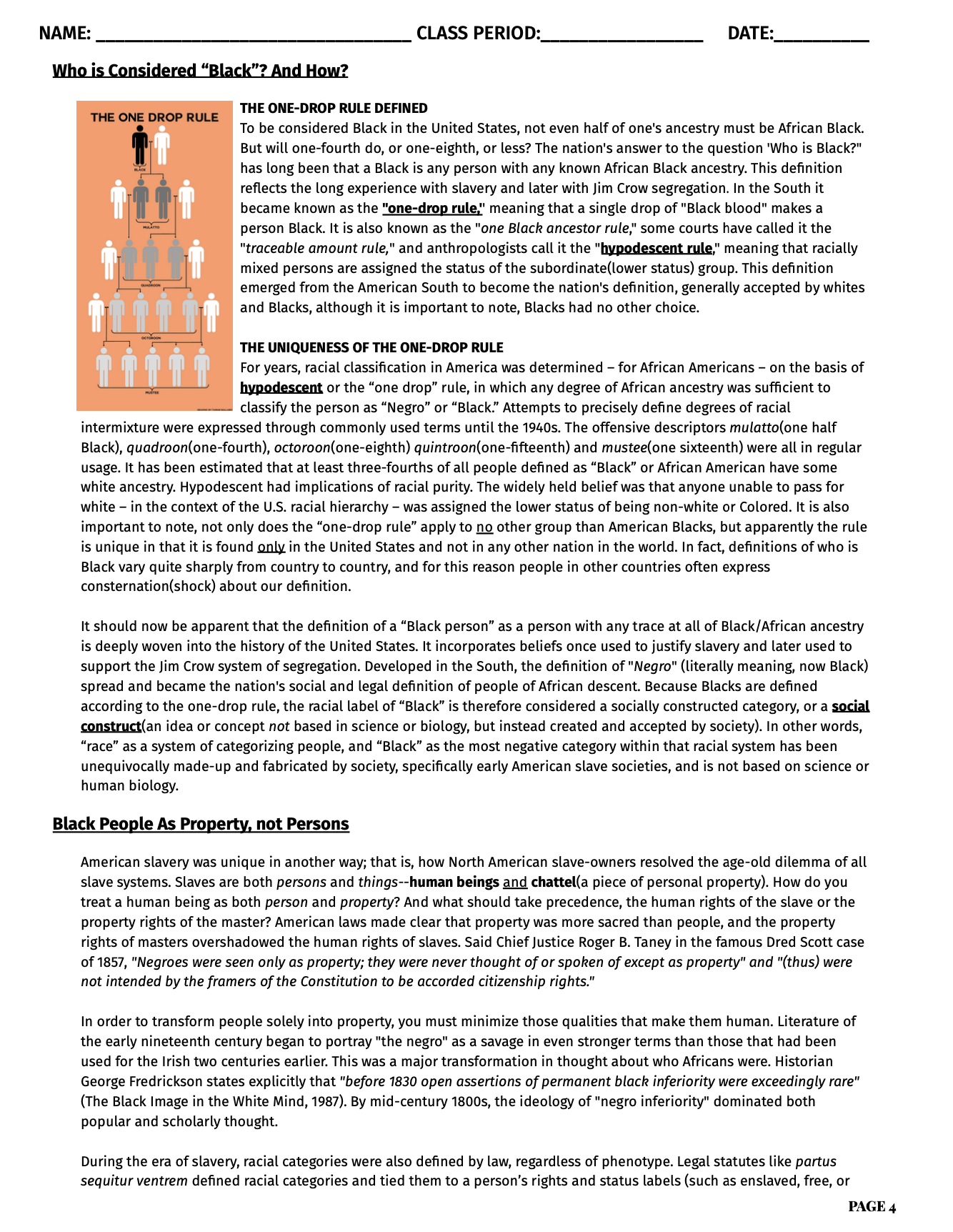
- 📖 In-depth reading on the historical origins of "race" as a social and legal category
- ⚖️ Analysis of the one-drop rule, hypodescent, and the legal treatment of Black people as property
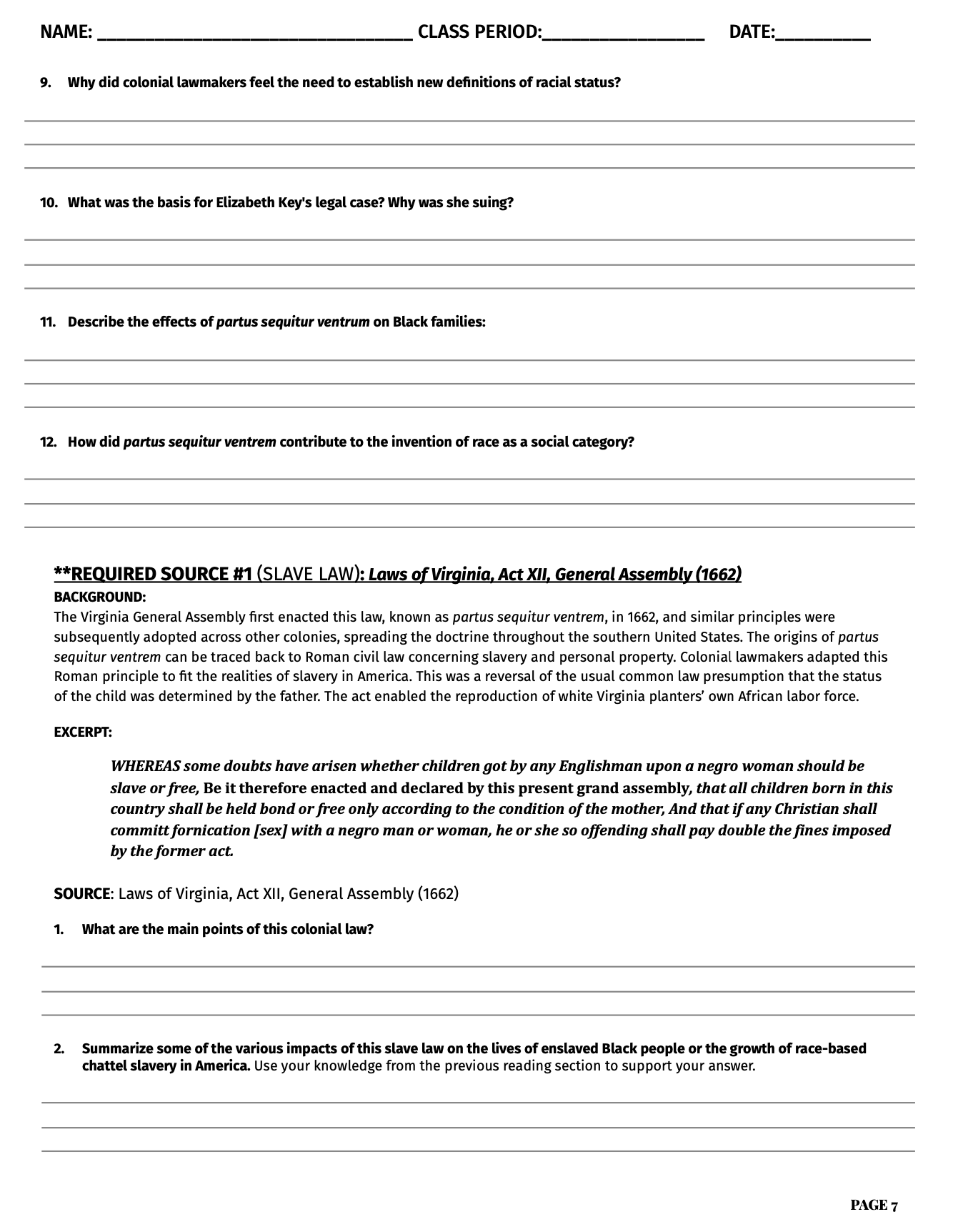
- 📜 Primary source analysis of the 1662 Virginia partus sequitur ventrem law and the case of Elizabeth Key (1656)
- 🗞️ Primary source analysis of "Am I Not a Woman and a Sister?" from The Liberator (1849)
- 🕰️ Interactive timeline activity charting Virginia colonial slave laws (1640–1705)
- 🧠 Comprehension questions, vocabulary connections, and reflective writing throughout
📚 Students Will Learn About:
- 🧬 The distinction between "race" and "ethnicity," and how race emerged as a social construct rather than a scientific reality
- 📈 How the rise of the anti-slavery movement pushed proslavery advocates to invent ideological justifications for racial hierarchy
- 🩸 The one-drop rule and hypodescent, and their unique role in defining Blackness in the United States
- ⚖️ How enslaved people were legally treated as property rather than persons, as reflected in the Dred Scott decision
- 👶 The doctrine of partus sequitur ventrem and its role in making slavery hereditary and matrilineal
- 👩🏽⚖️ Elizabeth Key's 1656 legal case and its influence on the 1662 Virginia slave law
- 🗞️ How abolitionist media, like The Liberator, appealed to white women to recognize enslaved women's shared humanity
- 🕰️ How Virginia's colonial legal system incrementally codified race-based chattel slavery between 1640 and 1705
🎯 Perfect For:
- ✔ AP African American Studies (Topic 2.8)
- ✔ 9th–12th Ethnic Studies, African American History, or U.S. History enrichment
- ✔ Black History Month or African American history lessons
- ✔ Legal document analysis, vocabulary building, and timeline-based historical thinking
- ✔ Lessons exploring the social and legal construction of race in America
📎 Formats:
✅ Ready-to-print PDF
✅ Class-ready in 15 minutes or less
✅ Download once. Use every year.
🖥️📝 LESSON 2.8 WORKSHEET PACKET PREVIEW:
...
To access the full worksheet packet, make a one-time purchase and own this resource for life!