
$2.22
📓 LESSON 2.15-2.17 – Notes
Lesson 2.15–2.17 Notes (PDF) — FREEDOM-SEEKING ACROSS THE DIASPORA
**NOTE: This slide deck covers content from Topic 2.15 (Maroon Societies and Self-Emancipation), Topic 2.16 (Slavery & Freedom in Brazil), and Topic 2.17 (The Relationship Between Blacks and Indians)
Take students beyond the borders of the United States to explore freedom-seeking across the African Diaspora with this guided notes slide deck for Unit 2 of the AP African American Studies course. Lessons 2.15–2.17 cover maroon societies and their leaders, the unique alliance between Black Seminoles and the Seminole Nation, and the distinct path to freedom and abolition in Brazil.
📝 What's Included:
- ✅ 32-slide Guided Notes Slide Deck (PDF + printable)
- 🖥️ Link to Editable version (Google Slides)
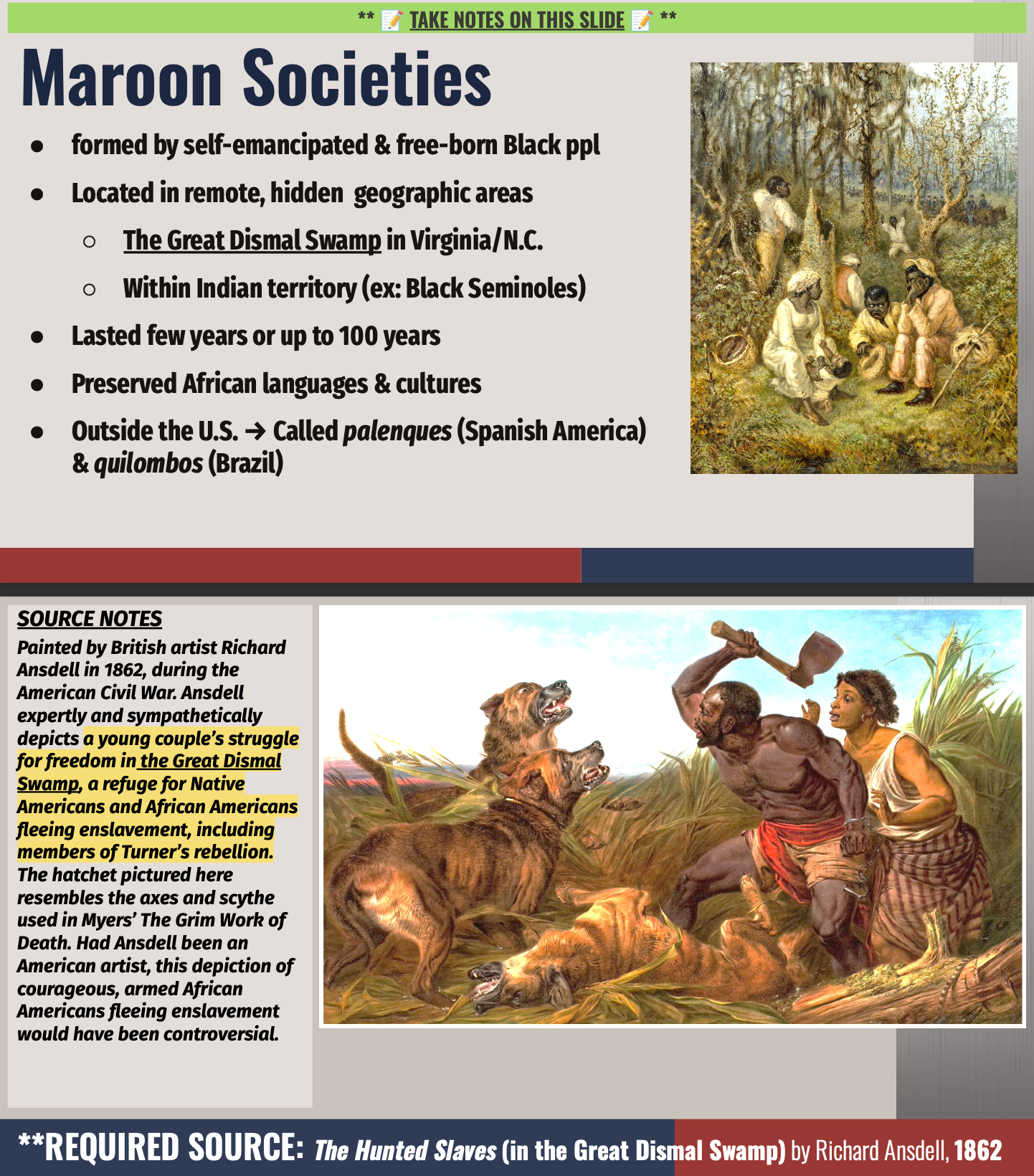
- 🌴 Notes on maroon societies, including the Great Dismal Swamp, Black Seminole territory, and Fort Mose
- 🖼️ Primary source analysis of "The Hunted Slaves" (1862), "The Maroons in Ambush" (1801), and a portrait of Leonard Parkinson (1796)
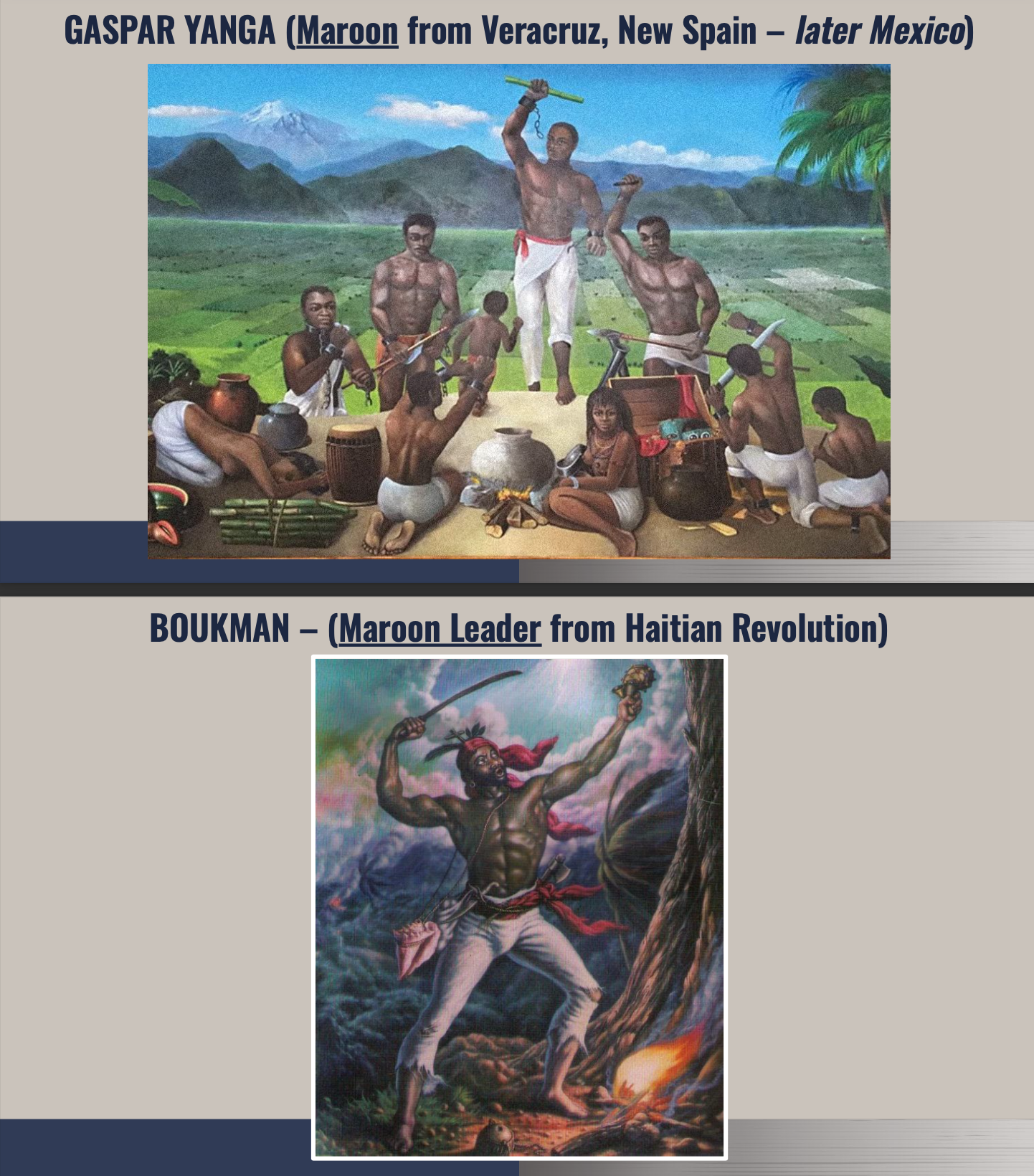
- 👑 Coverage of maroon leaders Gaspar Yanga, Queen Nanny, and Boukman
- 🪶 Reading on the alliance between Black maroons and the Seminole Nation, featuring leaders Abraham and John Horse (Gopher John)
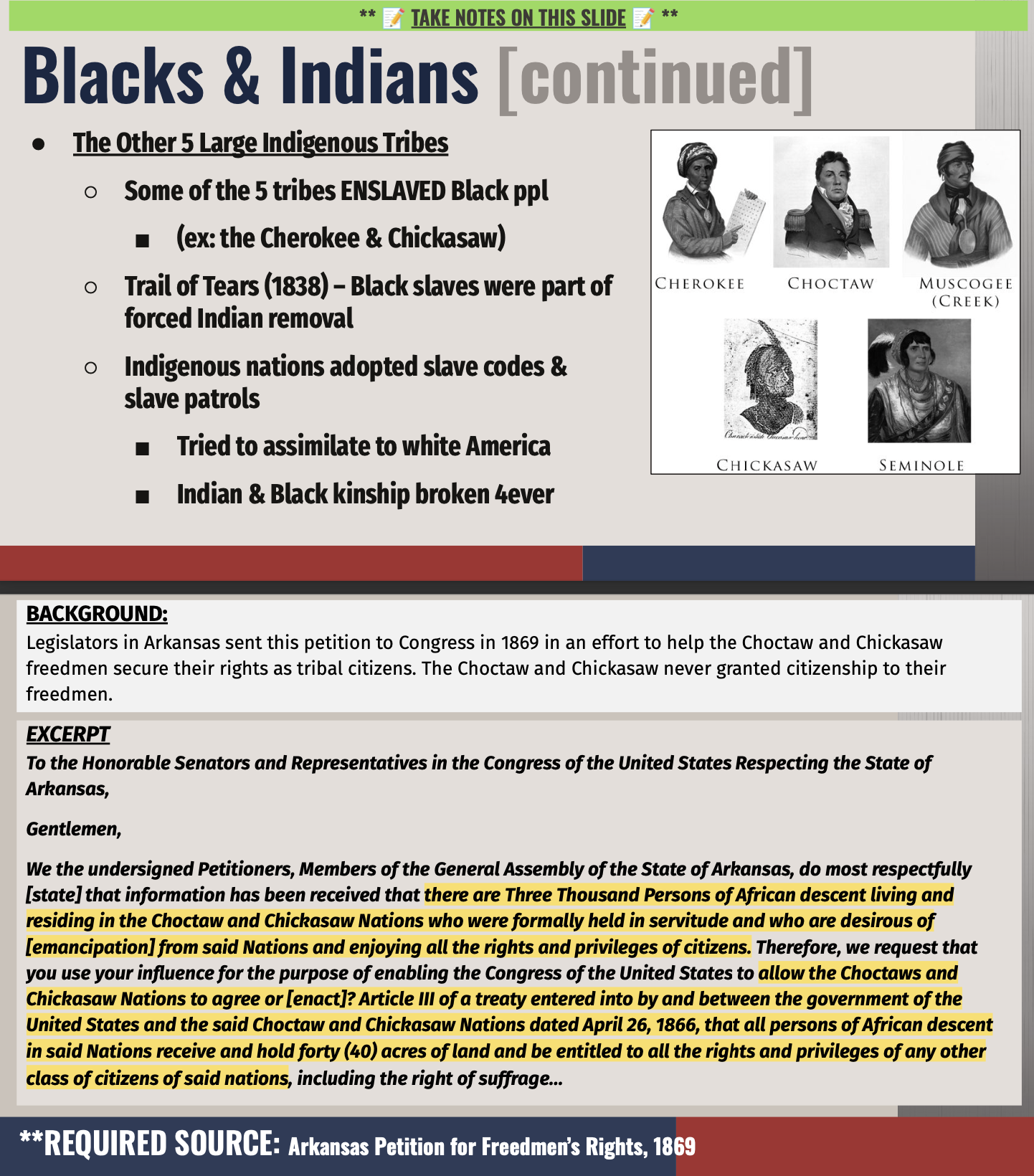
- 📜 Primary source analysis of an 1836 military diary entry on the capture of Black Seminoles and an 1869 Arkansas petition for Freedmen's rights
- 🇧🇷 In-depth reading on slavery, cultural preservation, and manumission in Brazil
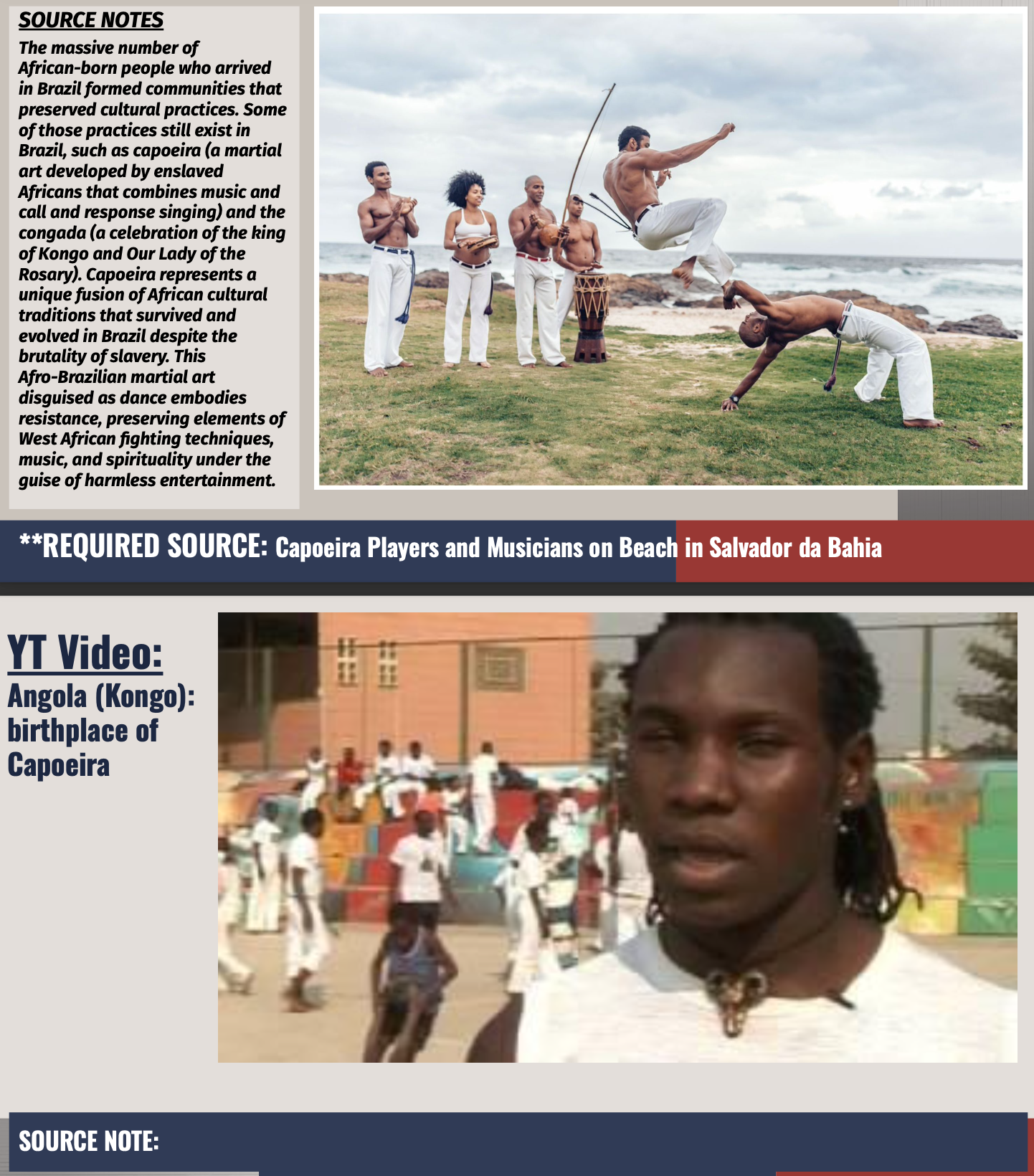
- 🖼️ Primary source analysis of three Brazil-related images, including capoeira and the Festival of Our Lady of the Rosary
- 🎥 Multiple video sources on maroon societies, Black Seminoles, and capoeira
- 🧠 Guided note-taking throughout
📚 Students Will Learn About:
- 🌴 How maroon societies formed in remote, hidden locations and preserved African languages and cultures for generations
- ⚔️ Maroon resistance leaders Gaspar Yanga, Queen Nanny, and Boukman, and their fights for freedom and autonomy
- 🪶 The alliance between Black maroons and the Seminole Nation in Florida, and leaders Abraham and John Horse
- ⚖️ How some of the "Five Civilized Tribes," including the Cherokee and Chickasaw, enslaved Black people and participated in the Trail of Tears
- 🇧🇷 How half of all enslaved Africans arrived in Brazil, and how Afro-Brazilian communities preserved culture through capoeira and the congada festival
- 📊 How freedom in Brazil compared to the United States, including manumission rates and the timeline toward abolition
- 🥋 Capoeira as a disguised form of African martial arts and cultural resistance under slavery
🎯 Perfect For:
- ✔ AP African American Studies (Topics 2.15–2.17)
- ✔ 9th–12th Ethnic Studies, African American History, or U.S. History enrichment
- ✔ Black History Month or African American history lessons
- ✔ Comparative diaspora studies, primary source and visual art analysis
- ✔ Lessons exploring freedom-seeking across the African Diaspora in the Americas
📎 Formats:
✅ Ready-to-print PDF
✅ Includes link to Editable Google Slide Deck
✅ Class-ready in 15 minutes or less
✅ Download once. Use every year.
🖥️📝 LESSON 2.15–2.17 NOTES PREVIEW:
...
To view and edit the full slide deck, make a one-time purchase and own these documents for life!