
$2.22
📓 LESSON 2.20-2.22 – Notes
Lesson 2.20–2.22 Notes (PDF) — THE UNDERGROUND RAILROAD & PHOTOGRAPHY
Bring the Underground Railroad and the power of abolitionist imagery to life with this guided notes slide deck for Unit 2 of the AP African American Studies course. Lessons 2.20–2.22 cover how the Underground Railroad and the Fugitive Slave Acts shaped the fight for freedom and highlight Harriet Tubman's work as a conductor and Union spy. The deck also shows how Sojourner Truth and Frederick Douglass used photography to claim dignity and reshape public perception of Black Americans.
📝 What's Included:
- ✅ 29-slide Guided Notes Slide Deck (PDF + printable)
- 🖥️ Link to Editable version (Google Slides)
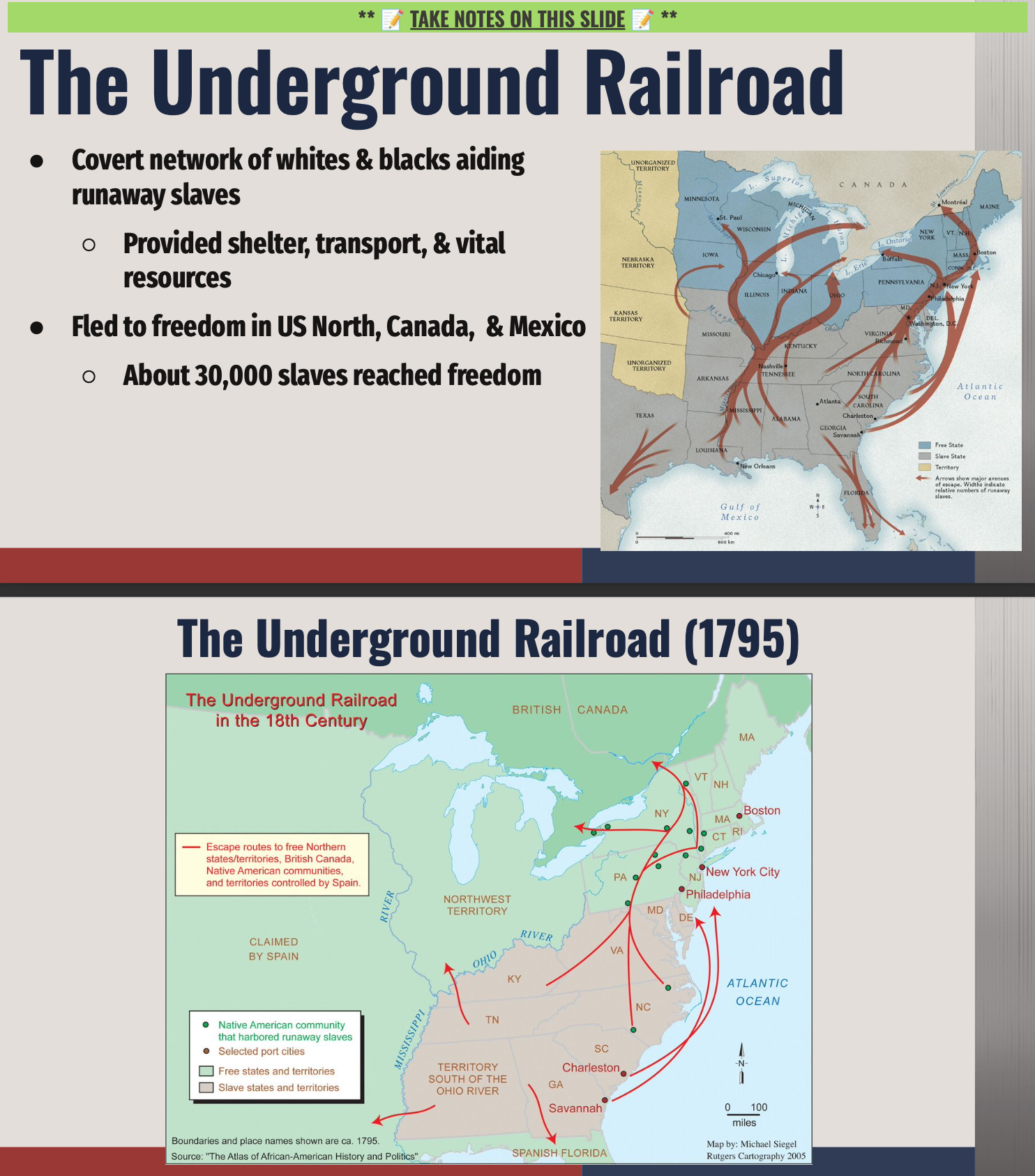
- 🗺️ Underground Railroad route maps from 1795 and 1850
- ⚖️ Notes on the Fugitive Slave Acts of 1793 and 1850, with visual sources
- 🌟 Notes on Harriet Tubman's work as a conductor and her Civil War service as a spy and nurse, including the Combahee River Raid
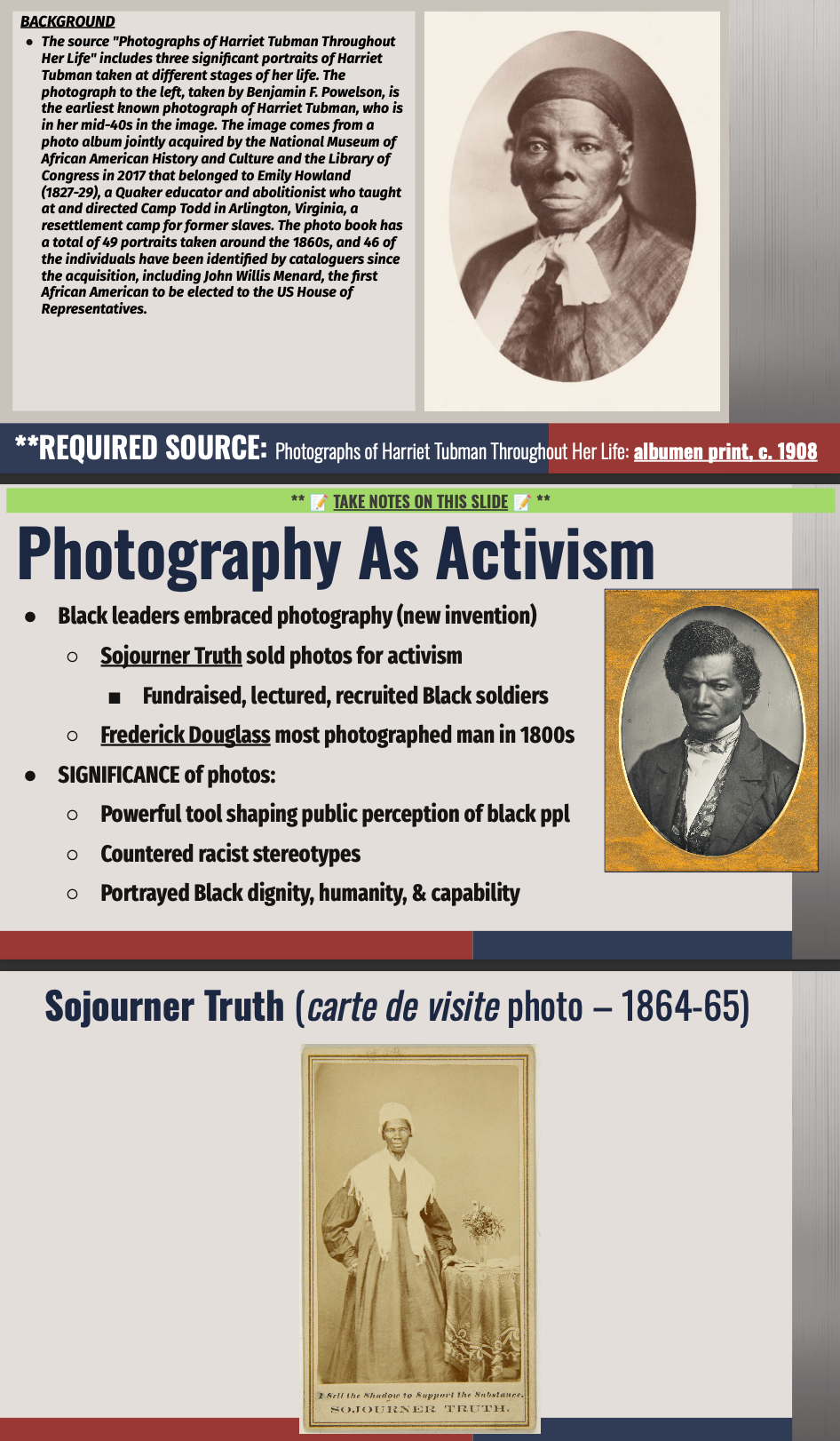
- 📸 Primary source photographs of Harriet Tubman across her life (1868–1908), with background context
- 🖼️ Sojourner Truth's cartes de visite photographs (1864–65)
- 📷 A gallery of Frederick Douglass photographs from 1841 to 1876, including the "most photographed man of the 1800s" slide
- 🎥 Video features on the Underground Railroad, the Fugitive Slave Law of 1850, Harriet Tubman and the Combahee River Raid, and why Frederick Douglass never smiled in photographs
- 🧠 Guided note-taking and video response prompts throughout
📚 Students Will Learn About:
- 🚂 How the Underground Railroad operated as a covert network of Black and white allies providing shelter, transport, and resources
- ⚖️ How the Fugitive Slave Acts enabled the legal kidnapping of escaped people, and how the Underground Railroad continued in defiance of them
- 🌟 Harriet Tubman's role as a conductor, including her use of spirituals, her deep knowledge of the landscape, and the safe routes she built
- ⚔️ Tubman's service to the Union Army as a spy and nurse and her role in the Combahee River Raid
- 📸 How Black leaders embraced the new technology of photography as a form of activism
- ✊🏾 How Sojourner Truth sold her photographs to fundraise, lecture, and recruit Black soldiers
- 🎩 Why Frederick Douglass became the most photographed man of the nineteenth century, and how his portraits countered racist stereotypes
- 🔍 How to analyze photographs as historical sources that portray Black dignity, humanity, and capability
🎯 Perfect For:
- ✔ AP African American Studies (Topics 2.20–2.22)
- ✔ 9th–12th Ethnic Studies, African American History, or U.S. History enrichment
- ✔ Black History Month or Women's History Month lessons
- ✔ Primary source, photograph, and visual analysis
- ✔ Lessons exploring the Underground Railroad, Harriet Tubman, and abolitionist visual culture
📎 Formats:
✅ Ready-to-print PDF
✅ Includes link to Editable Google Slide Deck
✅ Class-ready in 15 minutes or less
✅ Download once. Use every year.
🖥️📝 LESSON 2.20–2.22 NOTES PREVIEW:

...
To view and edit the full slide deck, make a one-time purchase and own these documents for life!