
Starting from:
$2.22
📄 LESSON 2.20-2.22 – Packet
Lesson 2.20–2.22 Worksheet Packet (PDF) — THE UNDERGROUND RAILROAD & ABOLITION PHOTOGRAPHY
Explore the people, networks, and images behind the fight for freedom with this 10-page worksheet packet for Unit 2 of the AP African American Studies course. Topics 2.20–2.22 examine how the Underground Railroad operated, the legendary work of Harriet Tubman, and how photography and art helped Black leaders assert their dignity and challenge stereotypes, using firsthand testimony, a period biography, historical photographs, and a contemporary quilt portrait.
📝 What's Included:
- ✅ 10-page student worksheet packet (PDF + printable)
- 🖥️ Link to Editable version (Google Docs)
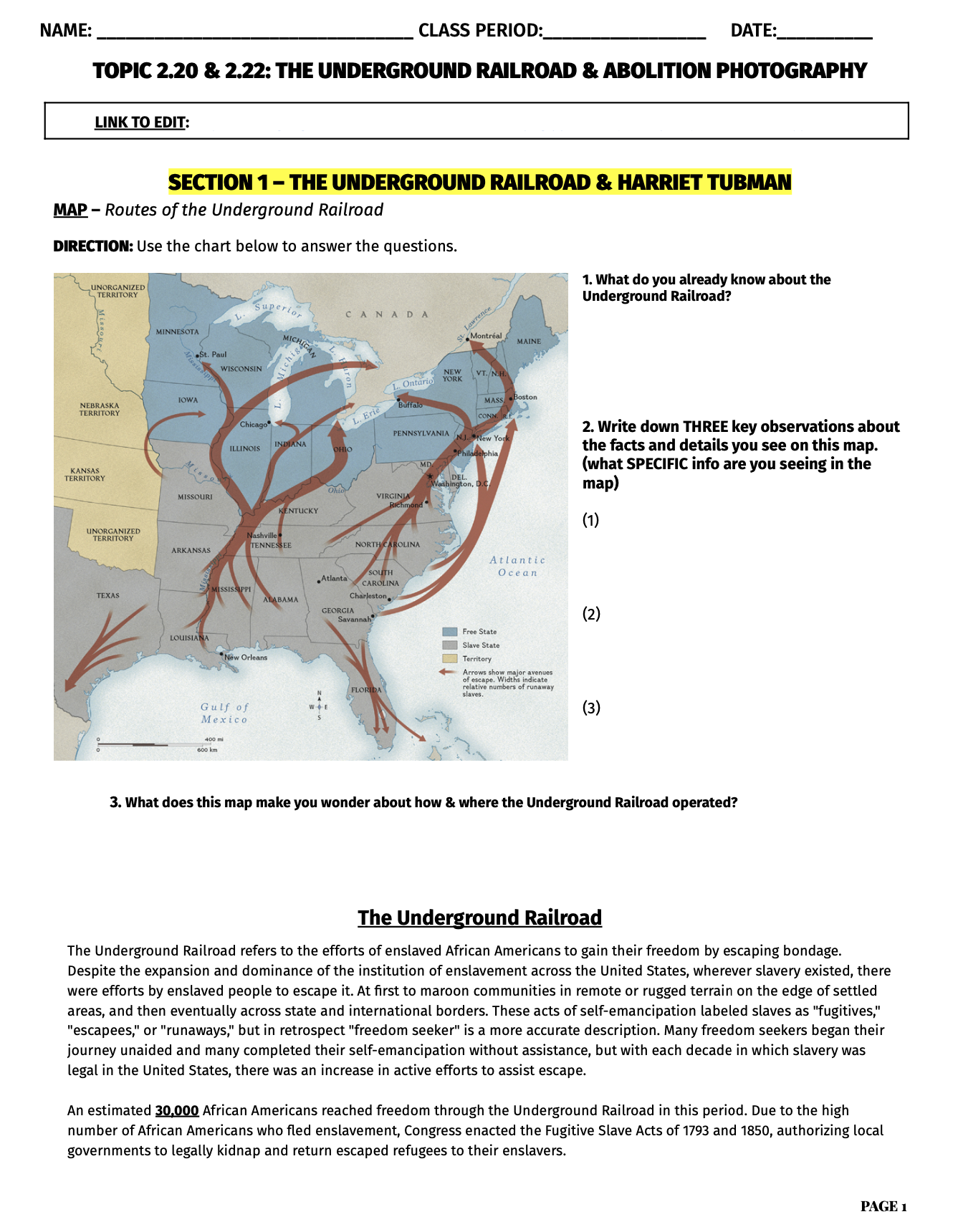
- 🗺️ Map analysis activity on the routes of the Underground Railroad, with a "what do you know, what do you notice, what do you wonder" framework
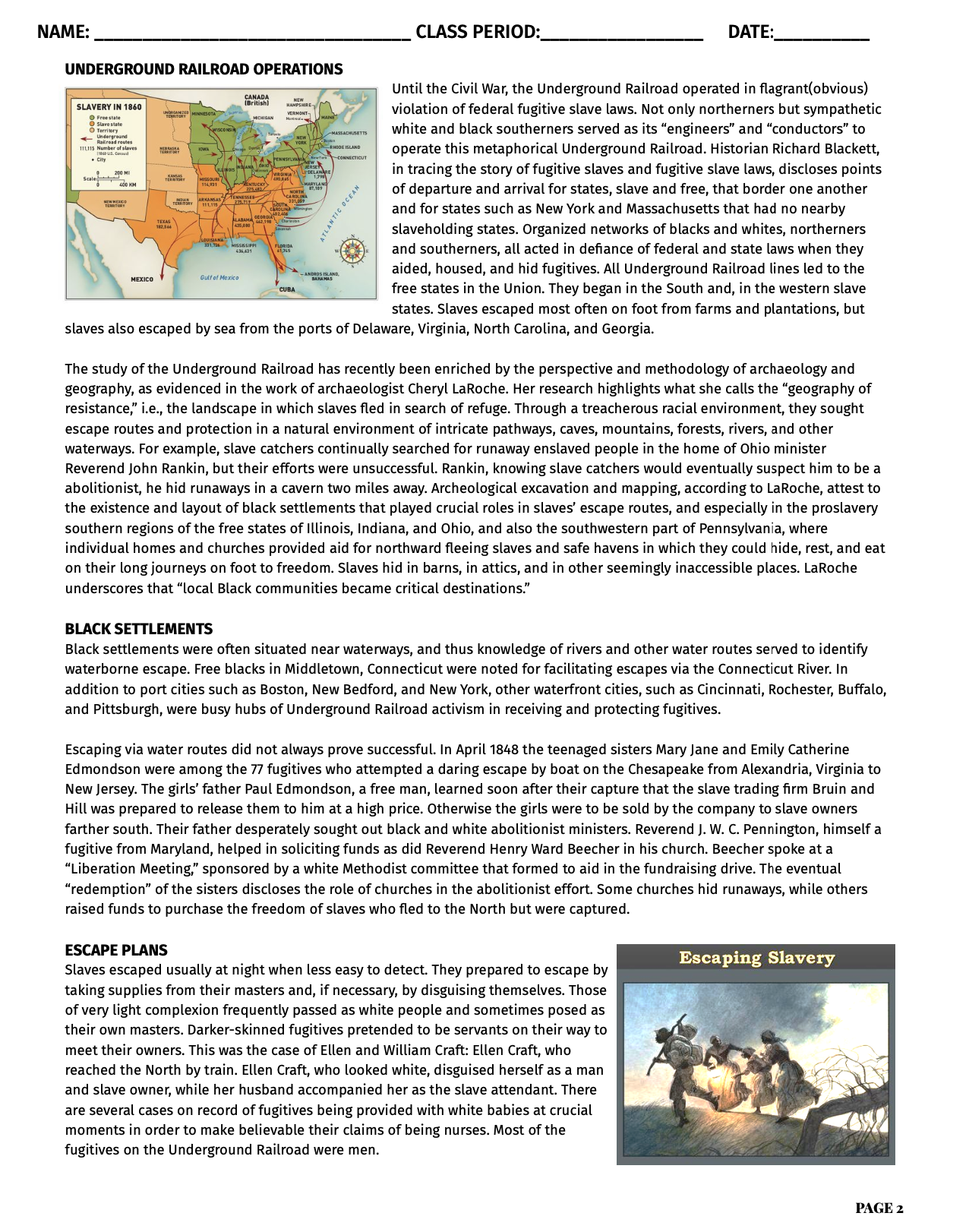
- 📖 In-depth reading on how the Underground Railroad operated, including its routes, escape plans, coded messages, resources, and operators
- 👥 Profiles of Black and white conductors, including Levi Coffin, John Fairfield, Josiah Henson, Elijah Anderson, John Mason, William Still, and David Ruggles
- 🌟 Reading on Harriet Tubman's work as a conductor, her Civil War service as a nurse, scout, and spy, and the Combahee River Raid of 1863
- 🗣️ Primary source analysis of Harriet Tubman's interview in The Refugee (1856)
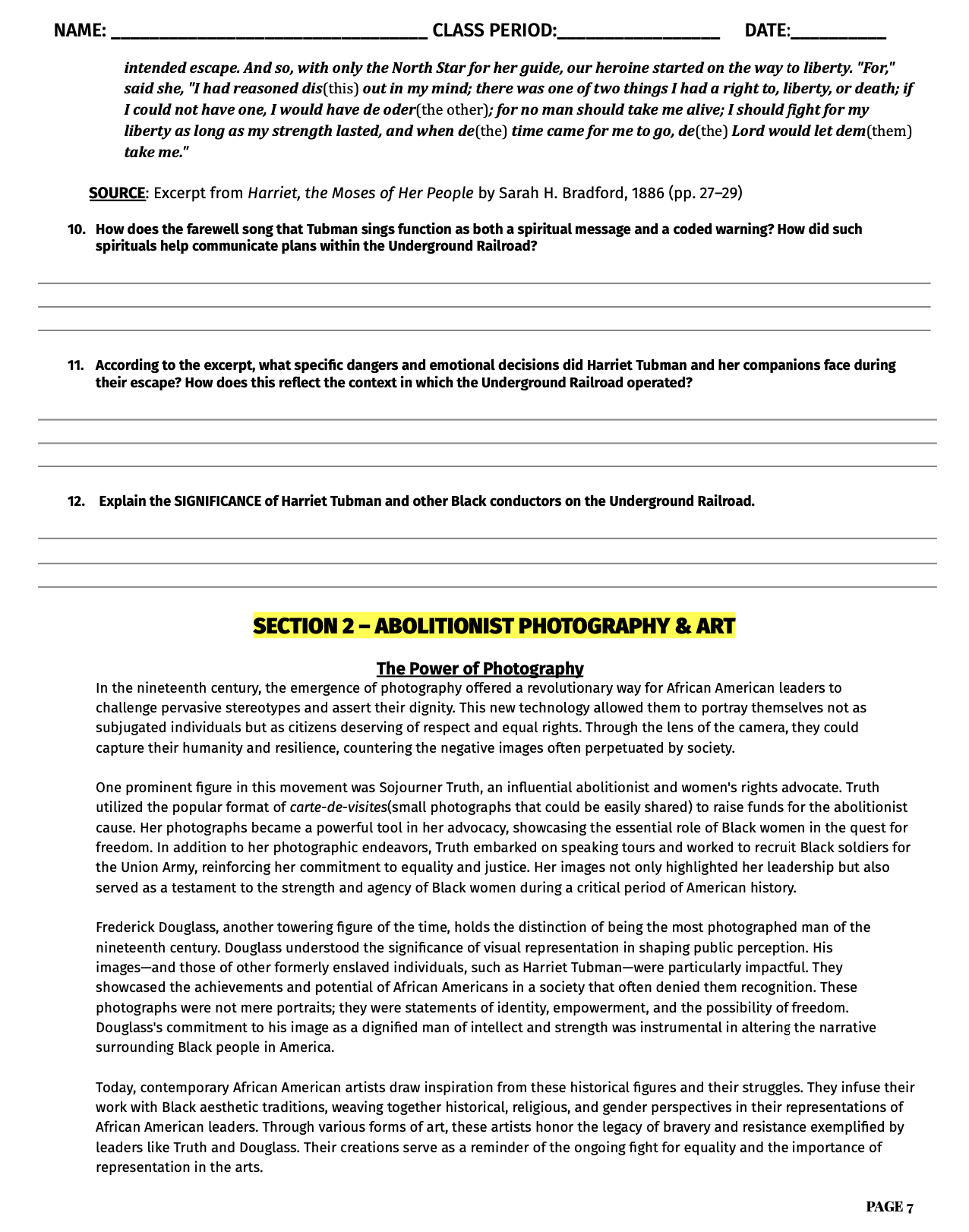
- 📜 Primary source analysis of an excerpt from Harriet, the Moses of Her People (1886), which includes a farewell spiritual
- 📸 Reading on how Sojourner Truth and Frederick Douglass used photography to assert their dignity and challenge stereotypes
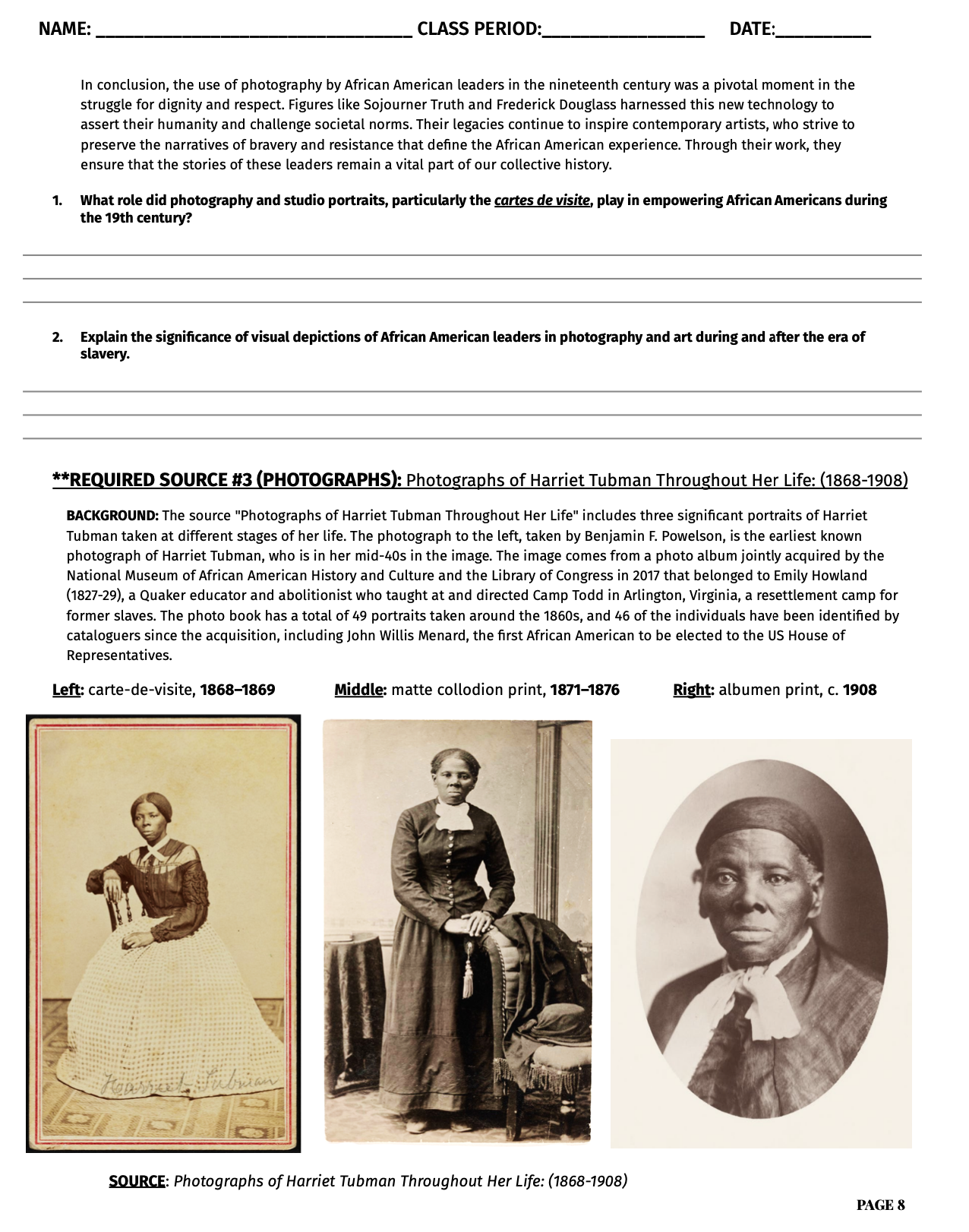
- 🖼️ Primary source analysis of photographs of Harriet Tubman across her life (1868–1908)
- 🧵 Analysis of Bisa Butler's quilted portrait I Go to Prepare a Place for You (2021)
- 🧠 Comprehension, source analysis, and inference questions throughout
📚 Students Will Learn About:
- 🚂 How the Underground Railroad worked as a network of routes, safe "stations," conductors, and coded messages that operated in defiance of fugitive slave laws
- 🌲 How freedom seekers used the landscape, including rivers, forests, and the North Star, to navigate their escape
- ✊🏾 The roles of Black and white conductors, vigilance committees, and churches in aiding freedom seekers
- 🌟 Harriet Tubman's role in the Underground Railroad and the Civil War, and why her contributions matter
- 🎶 How spirituals functioned as both faith and coded communication in Tubman's escape account
- 📸 How cartes de visite and studio portraits became tools of dignity and empowerment for Black leaders
- 🧵 How contemporary artists like Bisa Butler use symbolism, color, and craft to honor historical figures
- 🔍 How to analyze historical context across a range of source types, from testimony to photography to textile art
🎯 Perfect For:
- ✔ AP African American Studies (Topics 2.20–2.22)
- ✔ 9th–12th Ethnic Studies, African American History, or U.S. History enrichment
- ✔ Black History Month or Women's History Month lessons
- ✔ Primary source, photograph, and visual art analysis
- ✔ Lessons exploring the Underground Railroad, Harriet Tubman, and abolitionist visual culture
📎 Formats:
✅ Ready-to-print PDF
✅ Class-ready in 15 minutes or less
✅ Download once. Use every year.
🖥️📝 LESSON 2.20–2.22 WORKSHEET PACKET PREVIEW:
...
To access the full worksheet packet, make a one-time purchase and own this resource for life!