
$2.22
📓 LESSON 2.3 – Notes
Lesson 2.3 Notes (PDF) — IMPACT OF THE TRANS-ATLANTIC SLAVE TRADE (Part 1 & 2)
Guide students through the emotional and historical weight of the Trans-Atlantic Slave Trade with this guided notes slide deck for Unit 2 of the AP African American Studies course. Lesson 2.3 traces the three-part journey enslaved Africans endured — captivity and the march to the coast, the Middle Passage, and the "final" passage into American slavery — using film analysis, required primary sources, and a data-driven look at the trade's long-term impact on West and Central Africa.
⚠️ IMPORTANT NOTE/DISCLAIMER: This lesson includes sensitive and graphic historical content (i.e. abduction, extreme violence, nudity, suicide/murder, slave auction — tied to specific Amistad scenes). Content warnings are built into the guided notes to prepare students and center compassion and empathy.
📝 What's Included:
- ✅ 96-Slide Deck of Multimedia & Guided Notes (PDF + printable)
- 🖥️ Link to Editable Google Slide Deck
- 🎬 Film analysis using three scenes from Amistad, each with built-in content warnings and processing questions
- 🗺️ Required source maps on the scale and destinations of the slave trade
- 📜 Required primary source excerpts from Olaudah Equiano's narrative (1789) and Phillis Wheatley's poem "On Being Brought from Africa to America" (1773)
- 🎥 Additional video sources: Crash Course Black American History, World History Project (Ghanaian perspective), and "The Slave Ship L'Aurore"
- 🌐 Slave Voyages interactive timelapse map analysis with guided data chart
- 🧠 Guided note-taking and processing questions throughout
📚 Students Will Learn About:
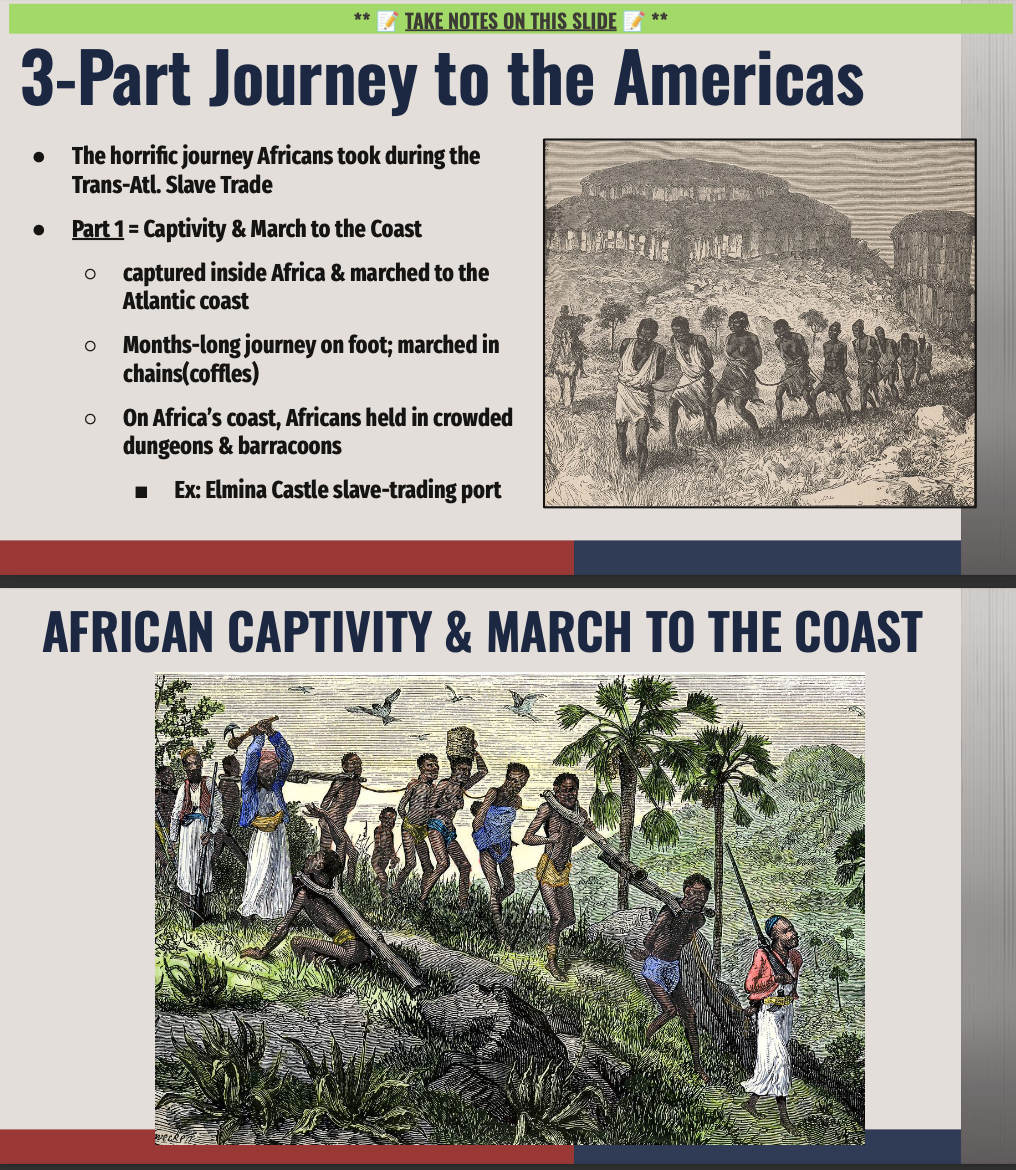
- ⛓️ The three-part journey of enslaved Africans: captivity and the coastal march, the Middle Passage, and the "final passage" into slavery
- 🏰 Coffles, barracoons, and European slave-trading forts such as Elmina Castle and the "Door of No Return"
- 🚢 The physical and psychological toll of the Middle Passage, including family separation, violence, disease, and an estimated 15% mortality rate
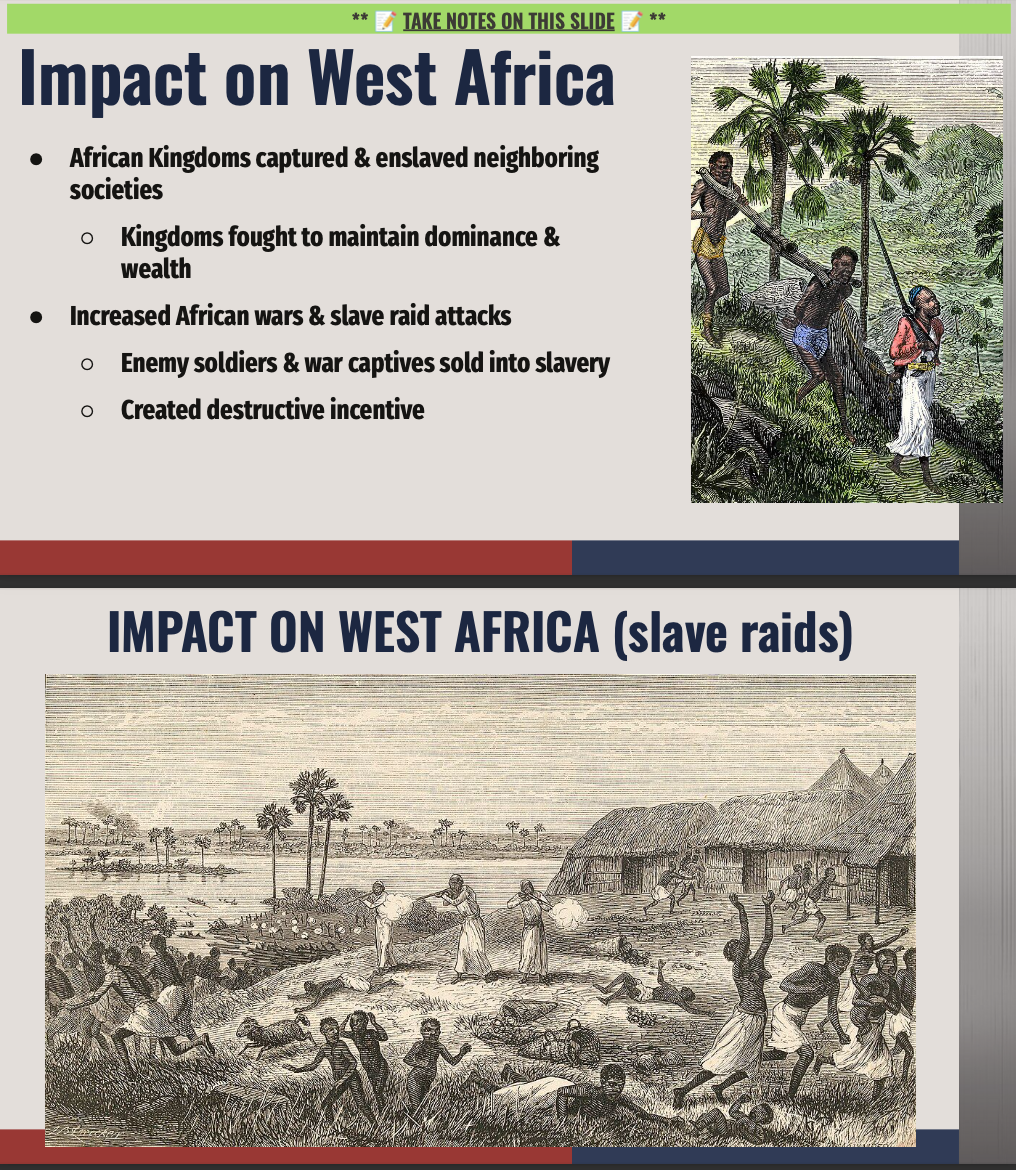
- ⚔️ How the slave trade destabilized West and Central African societies through increased warfare, slave raids, and the loss of a generation of leaders
- ✍️ The emergence of slave narratives — including Olaudah Equiano and Phillis Wheatley — as tools to advocate for abolition and Black humanity
- 🌍 The long-term demographic and cultural impact of the slave trade on Africa and the Americas
🎯 Perfect For:
- ✔ AP African American Studies (Topic 2.3)
- ✔ 9th–12th Ethnic Studies, African American History, or U.S. History enrichment
- ✔ Black History Month or African American history lessons
- ✔ Film analysis, primary source analysis, and historical empathy-building
- ✔ Lessons exploring the human impact of the Trans-Atlantic Slave Trade
📎 Formats:
✅ Ready-to-print PDF
✅ Includes link to Editable Google Slide Deck
✅ Class-ready in 15 minutes or less
✅ Download once. Use every year.
🖥️📝 LESSON 2.3 NOTES PREVIEW:
...
To view and edit the full lesson, make a one-time purchase and own these documents for life!