
$5
LESSON 2.5-2.6 – Complete Lesson Bundle
Lesson 2.5–2.6 Complete Lesson Bundle (Notes and Packet) — THE INSTITUTION OF AMERICAN SLAVERY
BUNDLE INCLUDES:
- 🖥️ Lesson 2.5 Guided Notes Slide Deck (PDF)
- 🖥️ Lesson 2.6 Guided Notes Slide Deck (PDF)
- 📄 Lesson 2.5–2.6 Worksheet Packet (PDF)
Examine the economic machinery and human cost of American slavery with this complete lesson bundle for Unit 2 of the AP African American Studies course. Two guided notes slide decks cover the rise of the domestic slave trade, the slave auction, enslaved labor systems, culture, and the economy of slavery. A 17-page worksheet packet adds primary and secondary source readings, video charts, and analysis of enslaved family life and Gullah Geechee culture.
⚠️ IMPORTANT NOTE: This bundle includes period language and sensitive content on family separation and sexual coercion under slavery.
📝 What's Included:
- ✅ 72 total slides across two Guided Notes Slide Decks (Lessons 2.5 and 2.6) + 17-page Student Worksheet Packet (PDF + printable)
- 🖥️ Link to Editable version (Google Slides & Google Docs)
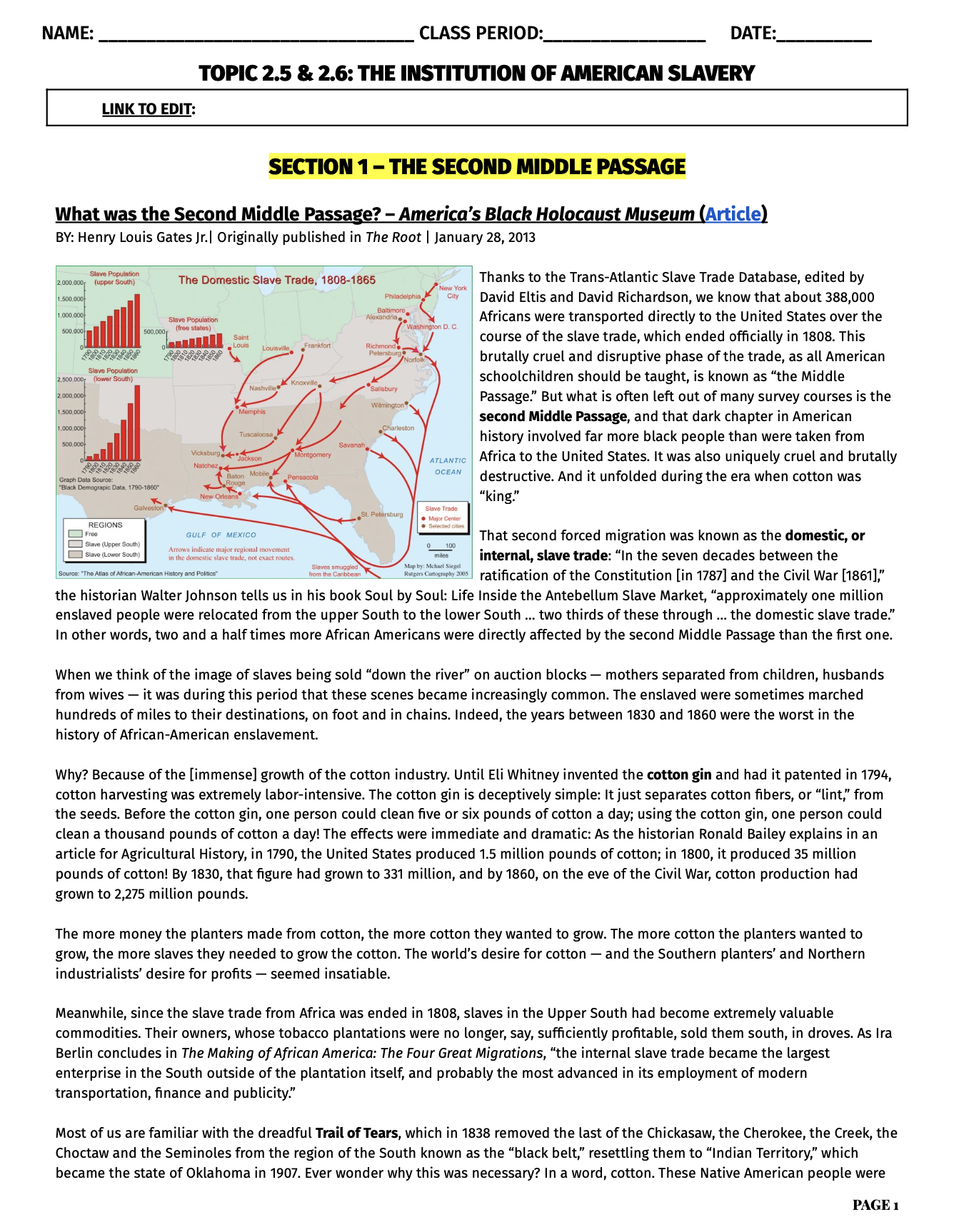
- 📰 Secondary source reading: "What Was the Second Middle Passage?" by Henry Louis Gates Jr.
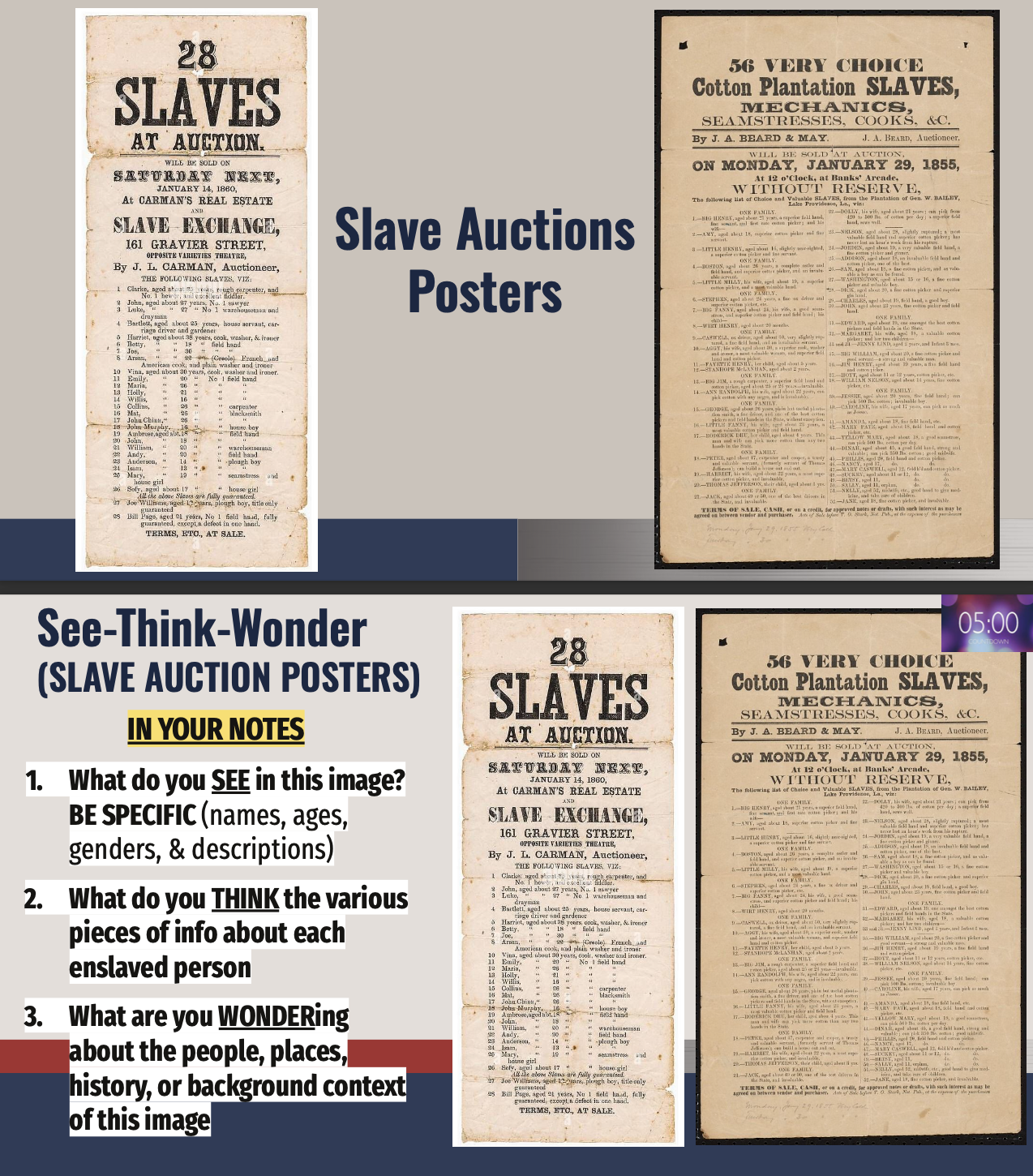
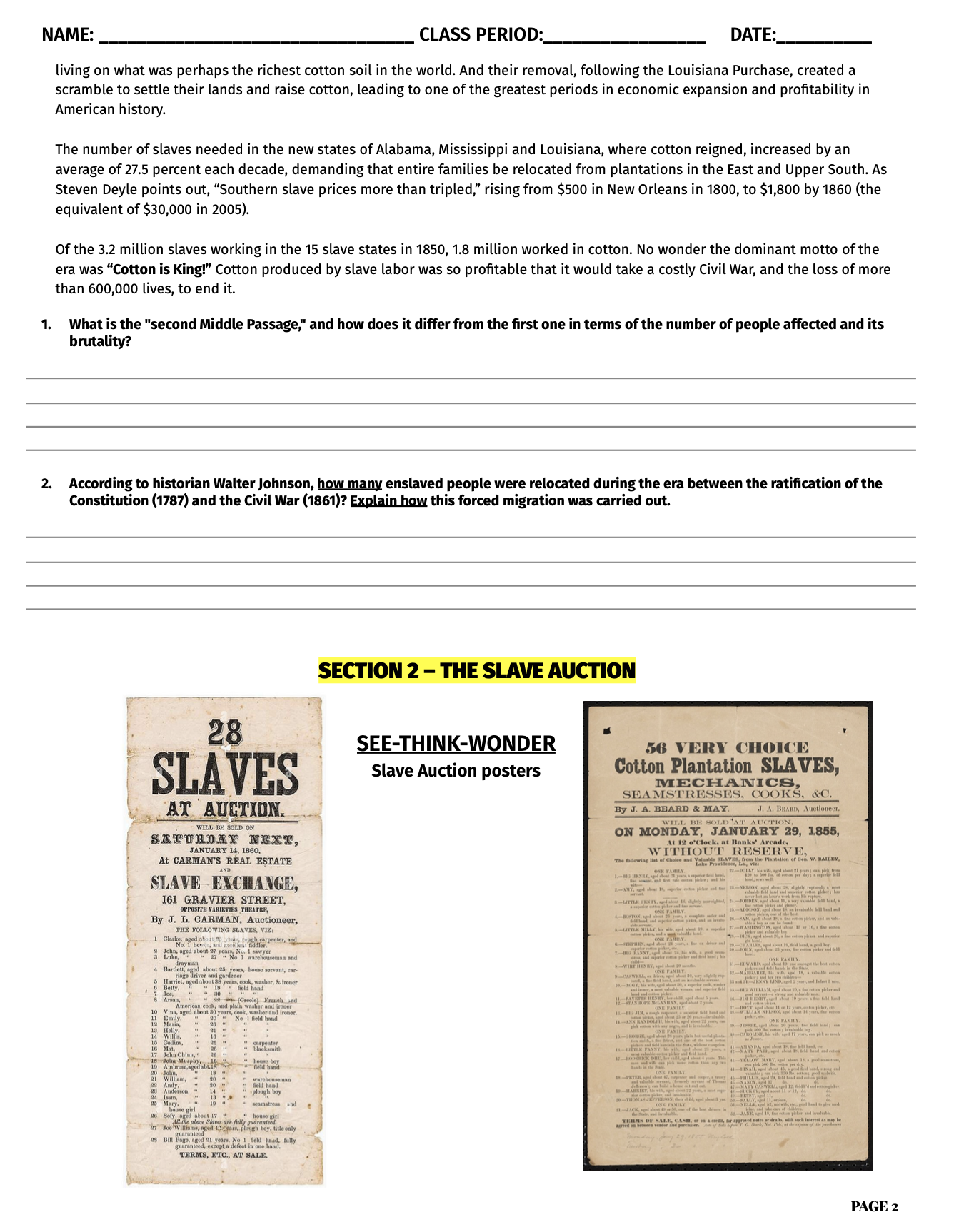
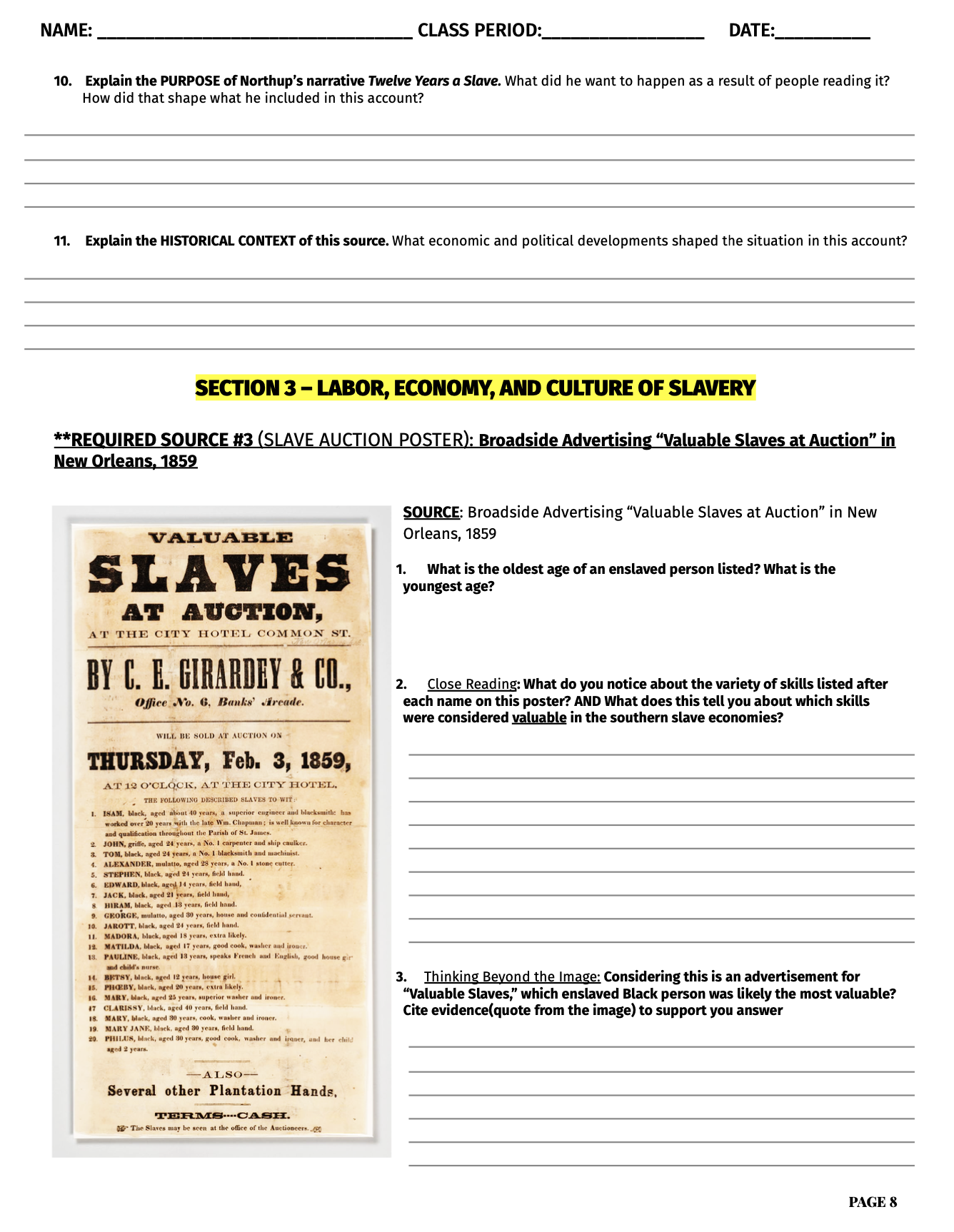
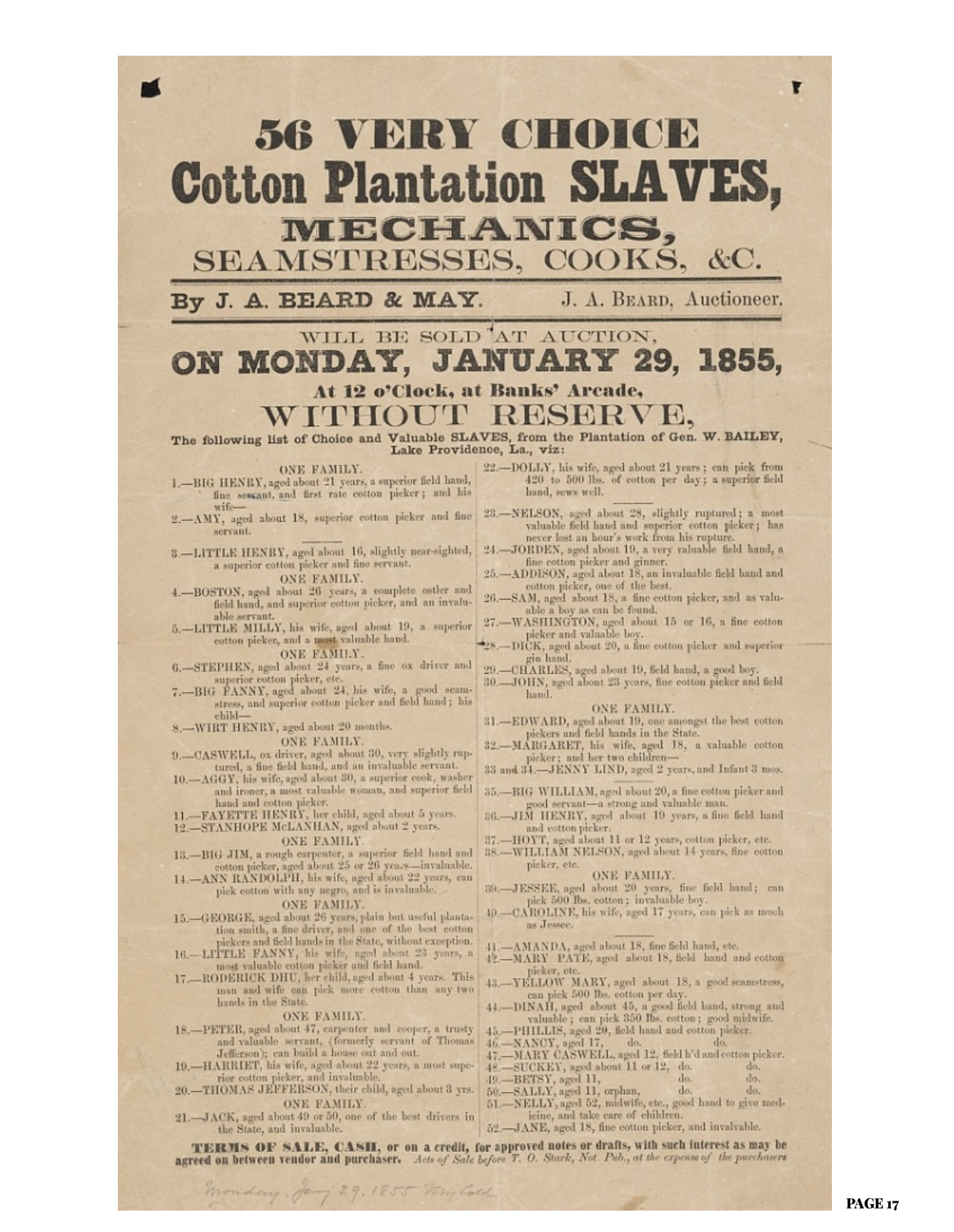
- 🖼️ Primary source analysis of two 1859 slave auction broadsides from Charleston and New Orleans
- 📖 Primary source excerpt from Solomon Northup's Twelve Years a Slave (1853)
- 🎥 Video features and discussion, including PBS's "The Cotton Economy and Slavery," film scenes from Twelve Years a Slave, and a "The Weeping Time" video chart (National Museum of African American History and Culture)
- 🗺️ Map comparison activity on agriculture, industry, and the domestic slave trade
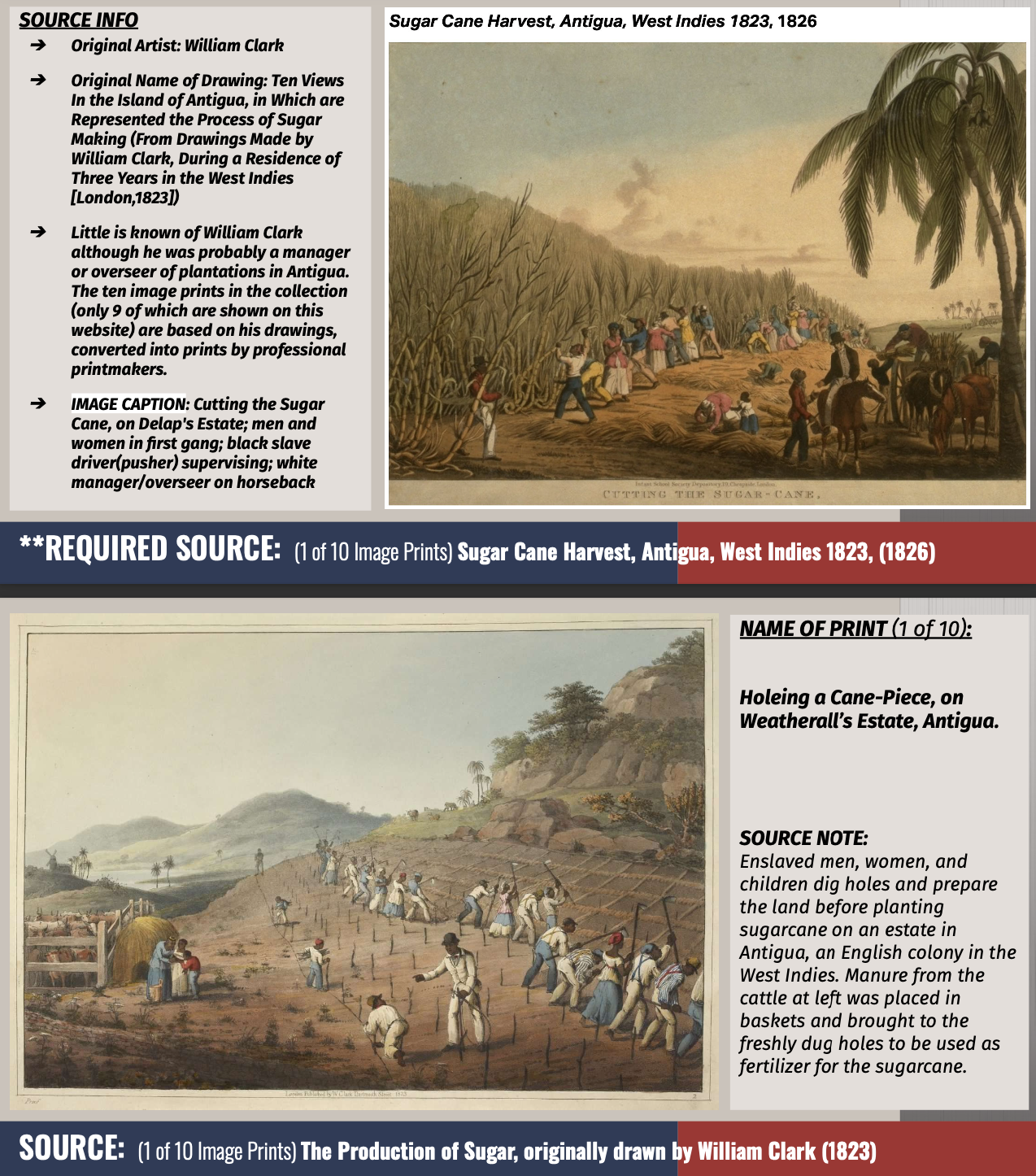
- 🧺 Primary source analysis of a Rice Fanner Basket (c. 1863) and a ten-print visual source set on sugar production in Antigua (1823)
- 🎶 Secondary source reading: "The Evolution of African American Music" by Portia K. Maultsby (1980)
- 🌊 Reading and analysis on enslaved family life, gender roles, and the Gullah Geechee people
- 🧠 Guided note-taking, See-Think-Wonder analysis, and comprehension prompts
📚 Students Will Learn About:
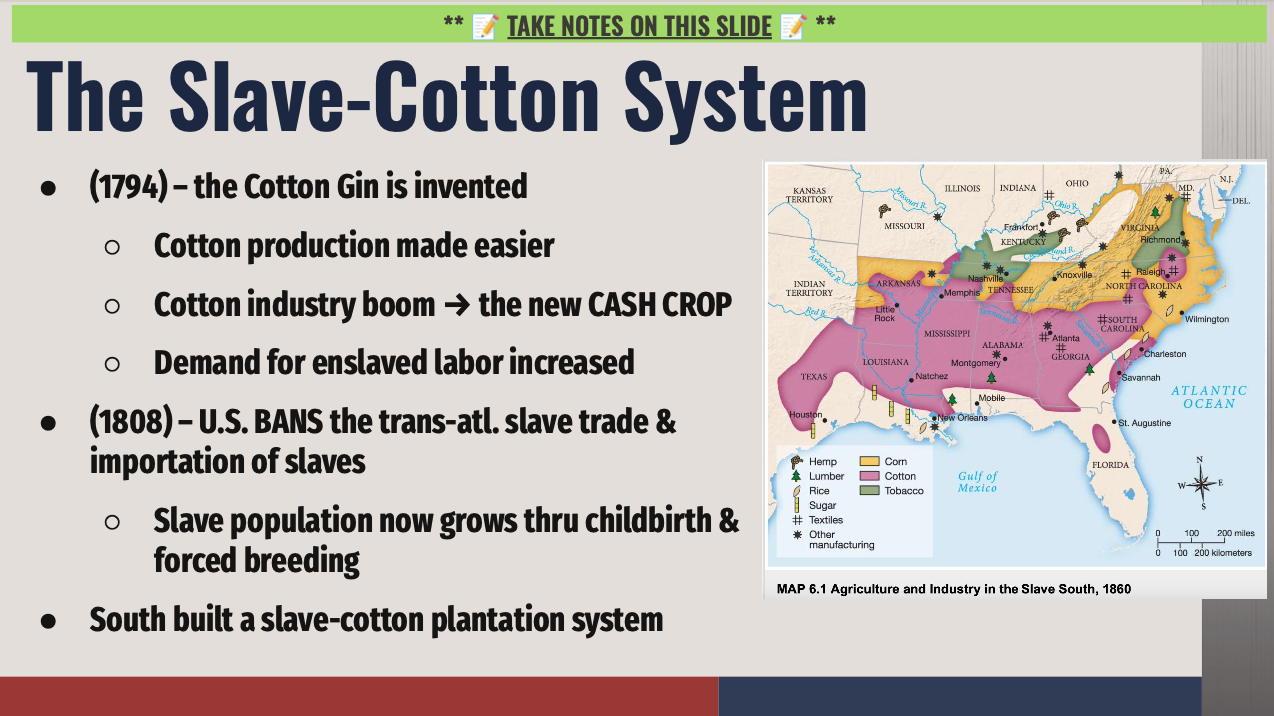
- 🌾 How the cotton gin and the 1808 ban on the transatlantic slave trade reshaped slavery and drove the domestic slave trade
- ⛓️ The "Second Middle Passage," the forced relocation of over one million enslaved people
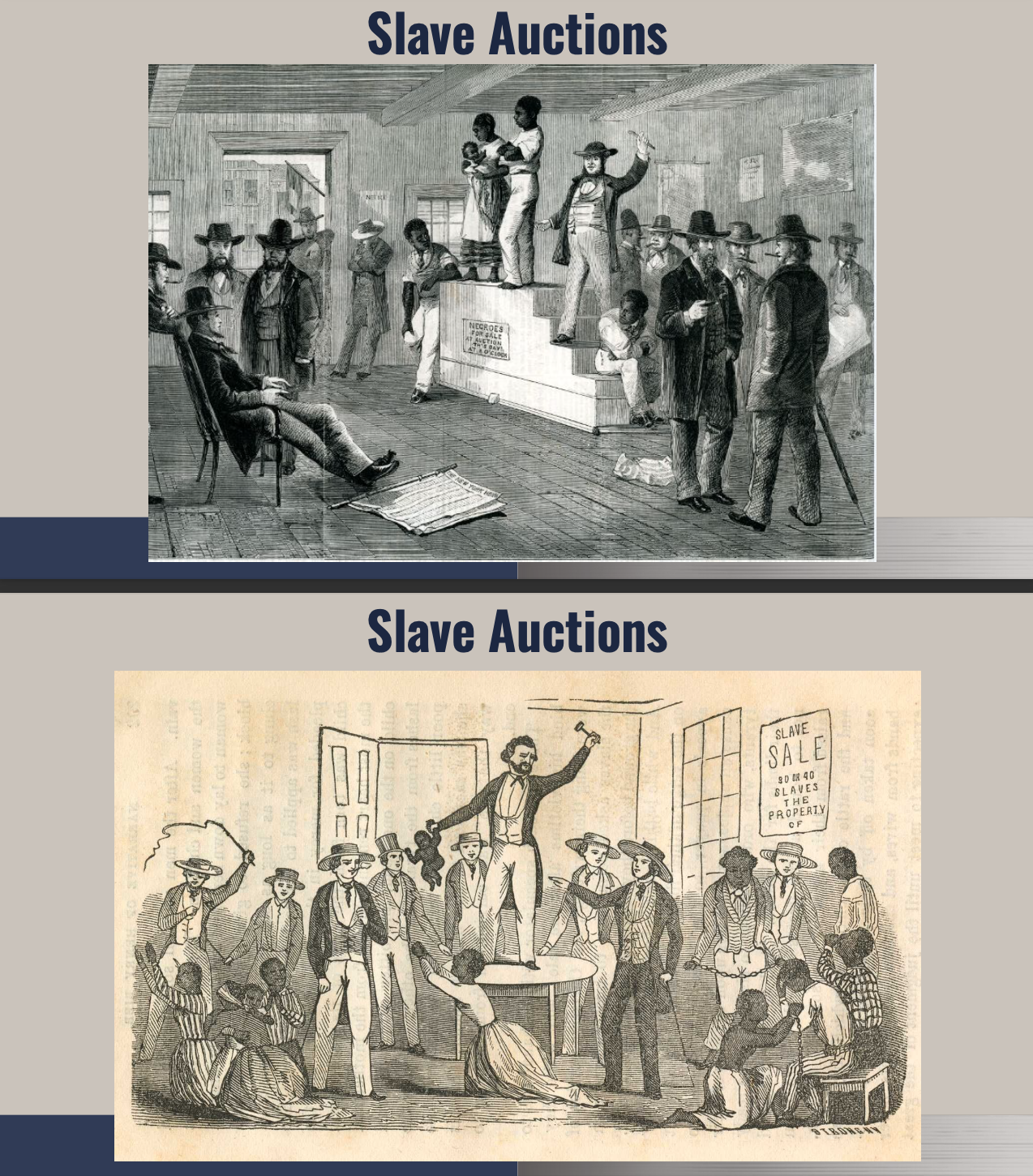
- 🏛️ The mechanics and psychological terror of the slave auction, including family separation
- 😢 The 1859 "Weeping Time" auction in Savannah and its significance
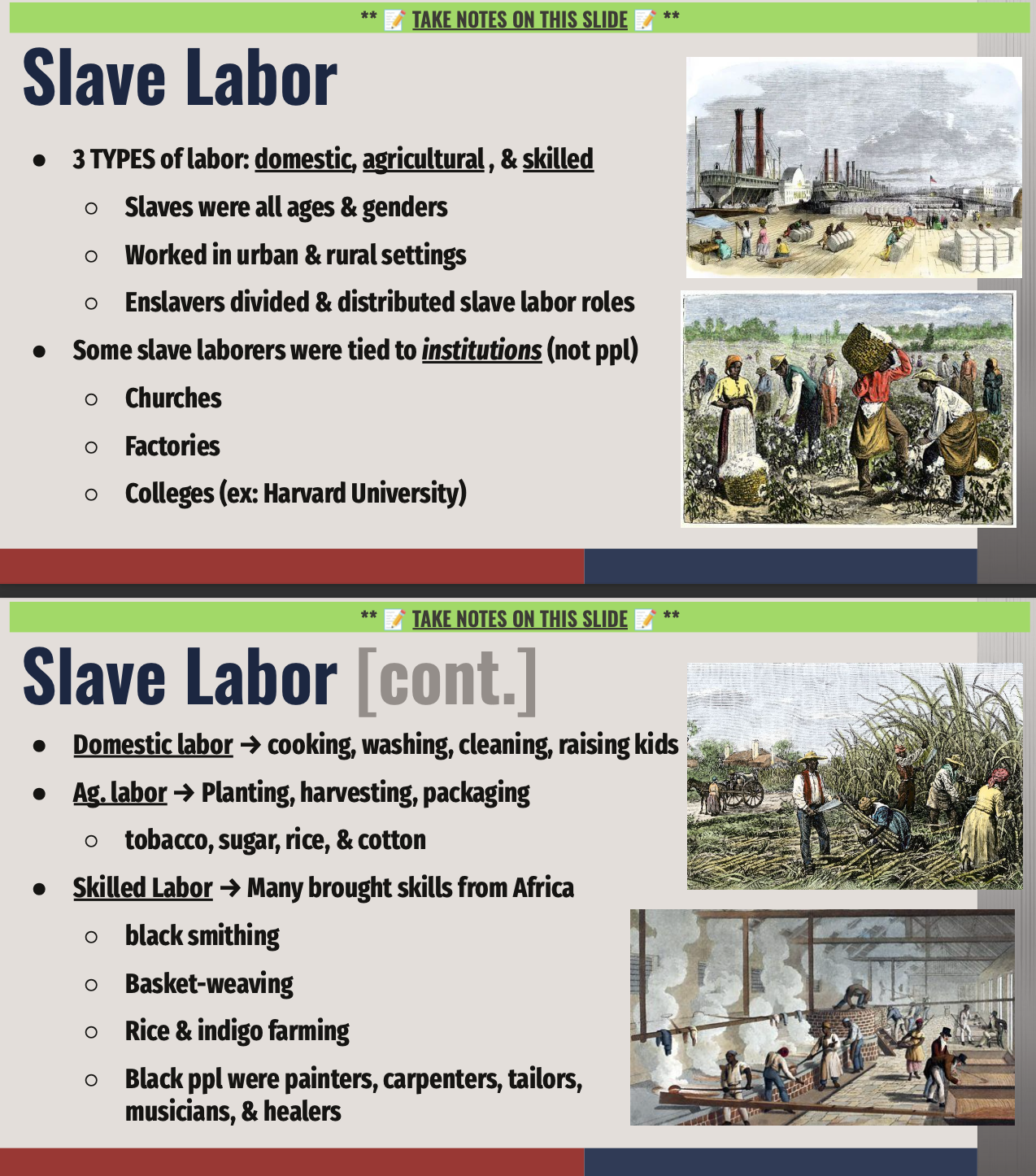
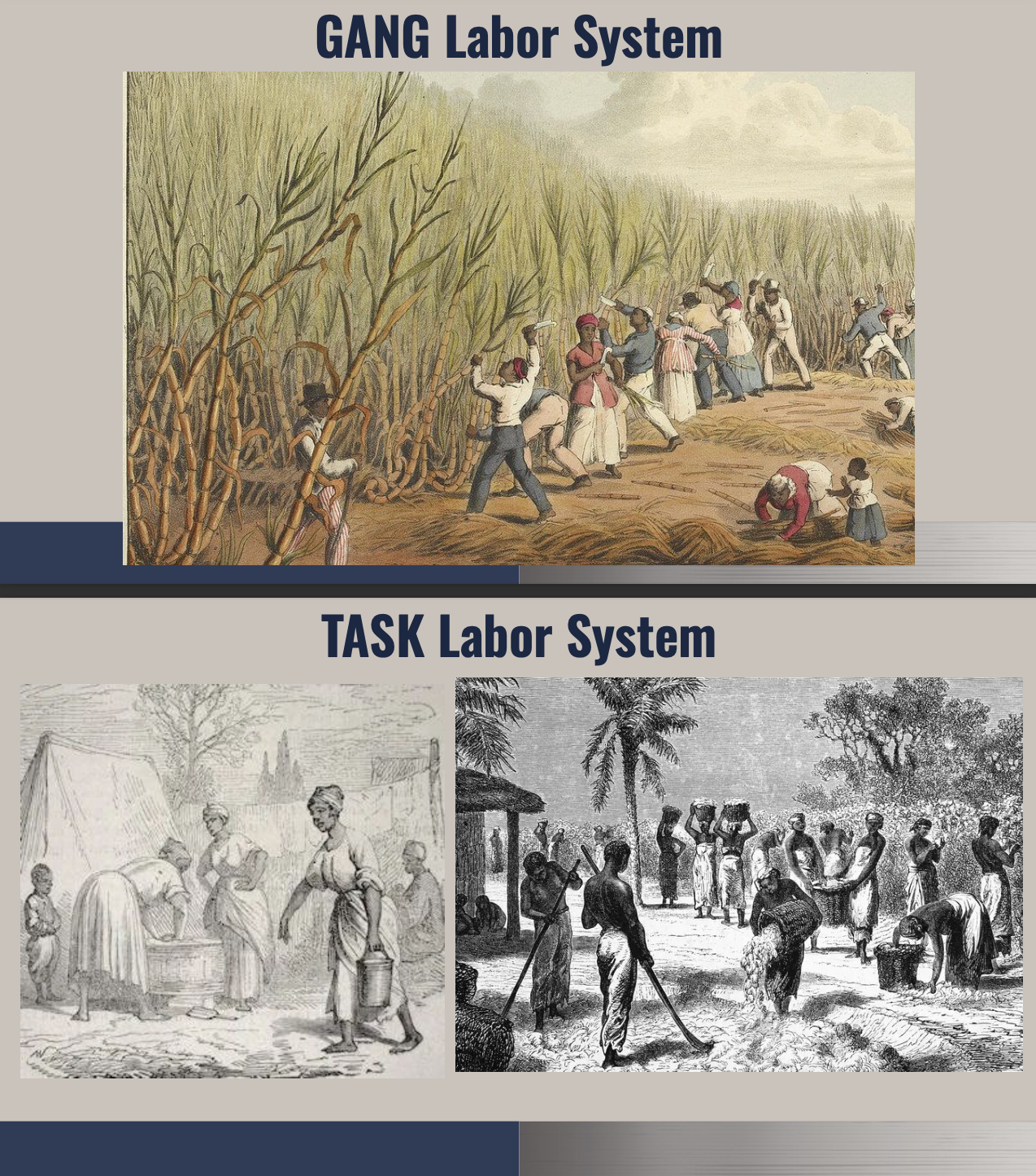
- 🛠️ The three types of enslaved labor (domestic, agricultural, and skilled) and the gang and task labor systems
- 🧵 How enslaved people preserved African knowledge, music, and craft traditions
- 👨👩👧👦 How family and community networks helped enslaved people survive
- 💰 Harvard University's ties to slavery and how slavery built an interdependent North-South economy that still shapes the racial wealth gap
🎯 Perfect For:
- ✔ AP African American Studies (Topics 2.5–2.6)
- ✔ 9th–12th Ethnic Studies, African American History, or U.S. History enrichment
- ✔ Black History Month or African American history lessons
- ✔ Primary and secondary source analysis, map comparison, and economic history connections
- ✔ Lessons exploring the domestic slave trade, enslaved labor, and enslaved cultural life
📎 Formats:
✅ Ready-to-print PDFs
✅ Includes links to Editable Google Slide Decks and Editable Google Doc
✅ Class-ready in 15 minutes or less
✅ Download once. Use every year.
🖥️📝 LESSON 2.5 NOTES PREVIEW:
...
🖥️📝 LESSON 2.6 NOTES PREVIEW:
...
📄 LESSON 2.5–2.6 WORKSHEET PREVIEW:
...
...
To view and edit the full lesson, make a one-time purchase and own these documents for life!