
$2.22
📄 LESSON 2.5-2.6 – Packet
Lesson 2.5–2.6 Worksheet Packet (PDF) — THE INSTITUTION OF AMERICAN SLAVERY
**NOTE: This worksheet covers content from BOTH Lesson 2.5 (Rise of the Domestic Slave Trade) and Lesson 1.6 (The Labor, Culture, and Economy of American Slavery)
Examine the brutal machinery of American slavery with this 17-page worksheet packet for Unit 2 of the AP African American Studies course. Topics 2.5–2.6 guide students through the domestic slave trade, the realities of the slave auction block, the labor and family life of enslaved communities, and the distinct culture of the Gullah Geechee people — using primary source broadsides, firsthand narratives, and secondary source historical analysis.
📝 What's Included:
- ✅ 17-page student worksheet packet (PDF + printable)
- 🖥️ Link to Editable version (Google Docs)
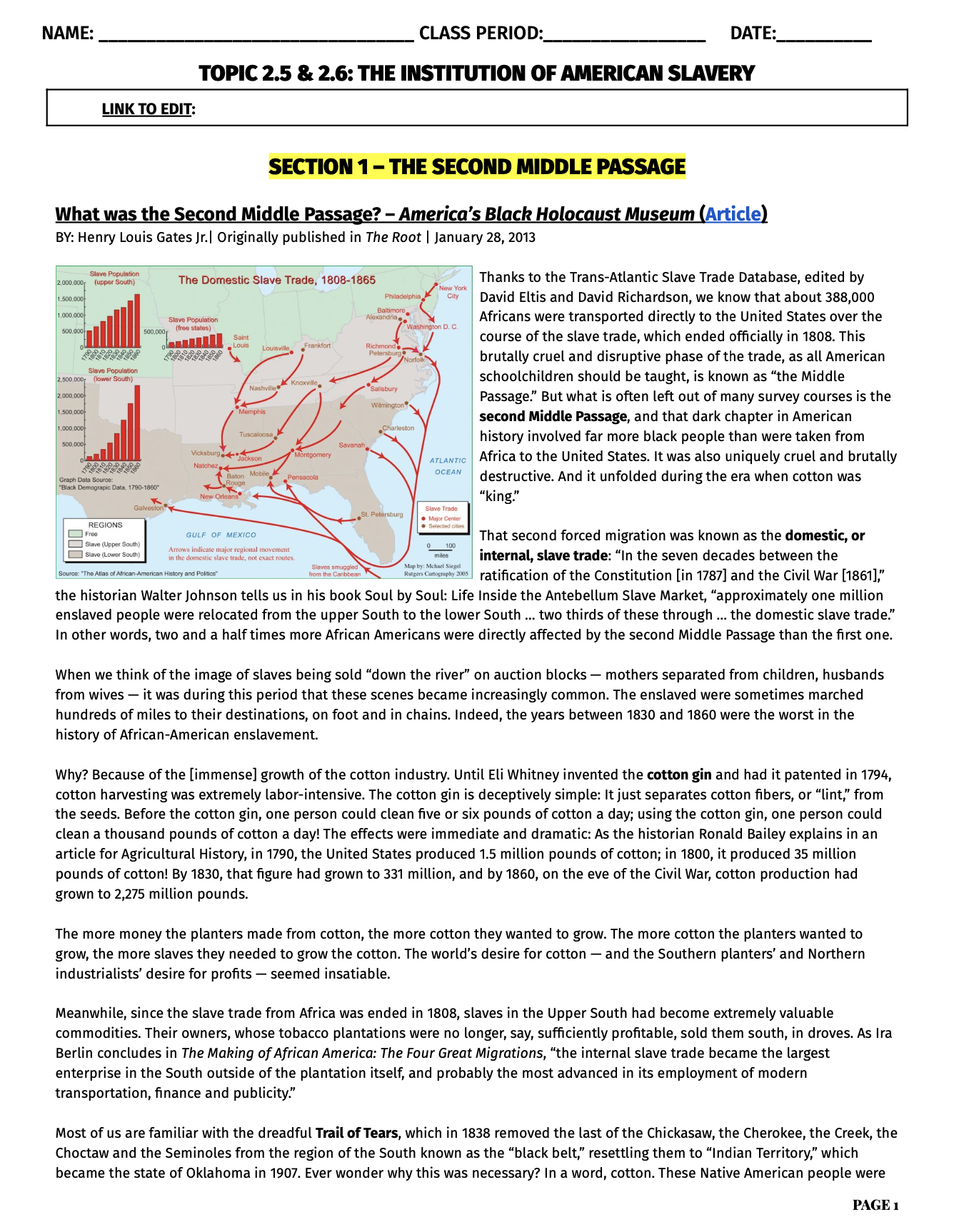
- 📰 Secondary source reading: "What Was the Second Middle Passage?" by Henry Louis Gates Jr.
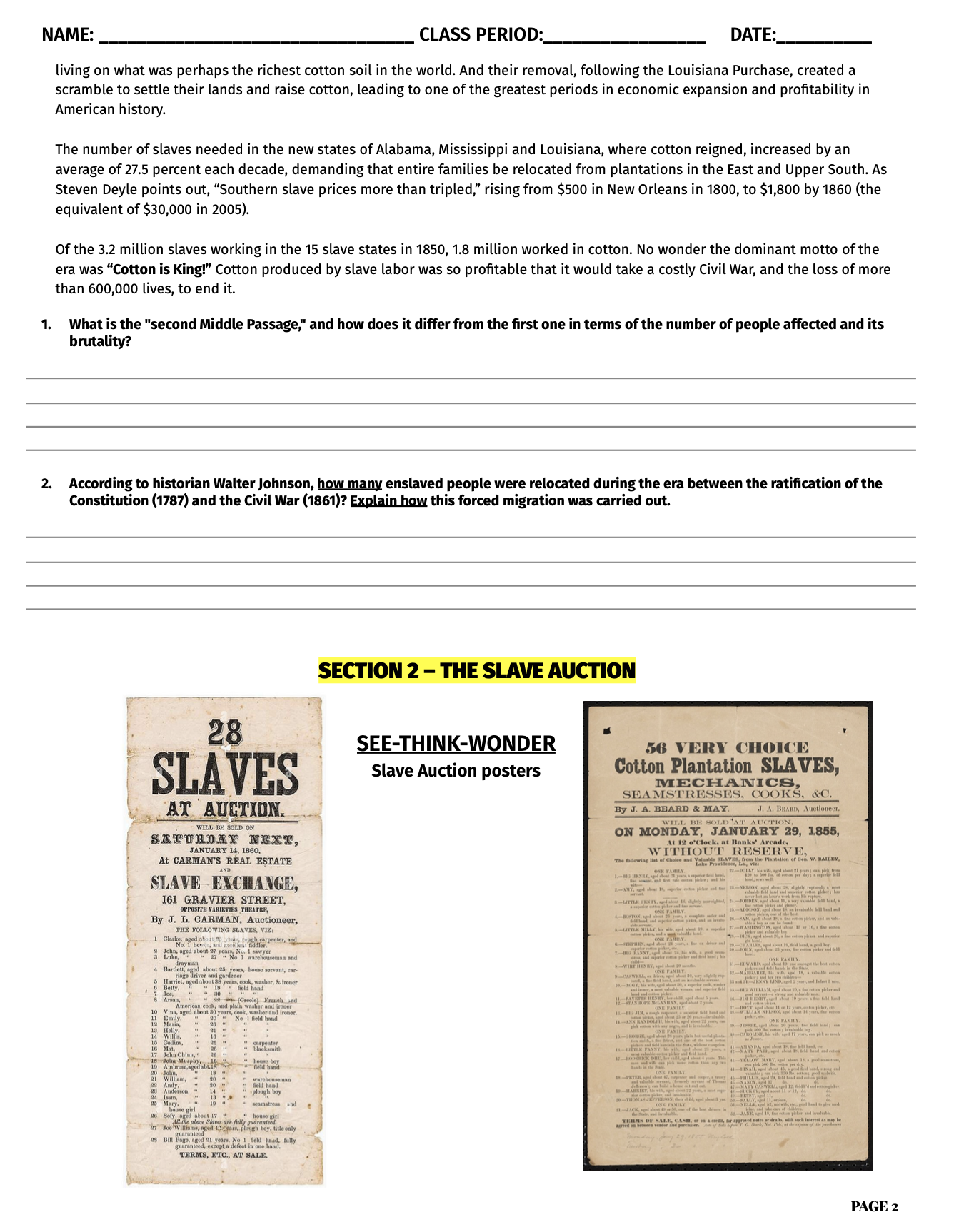
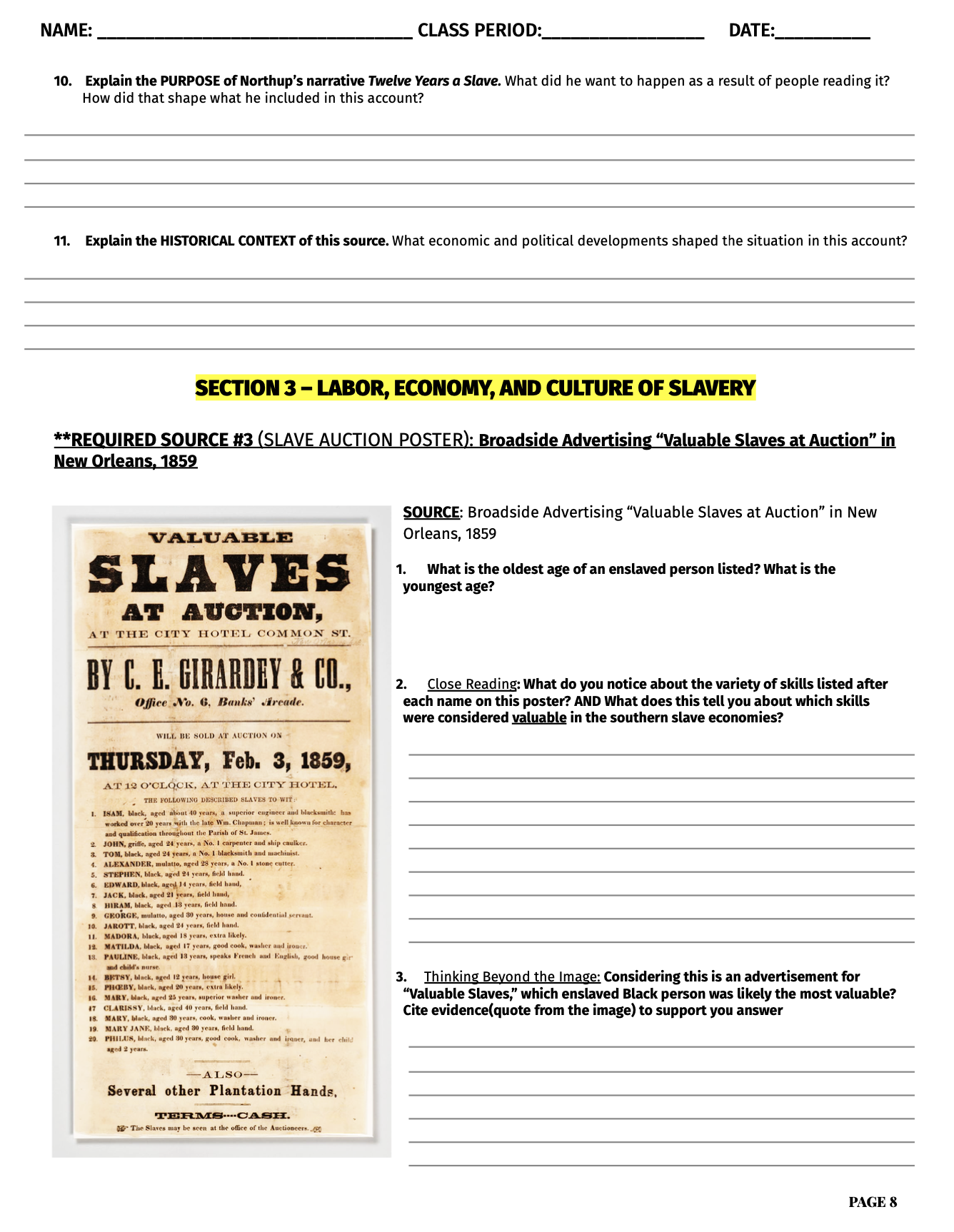
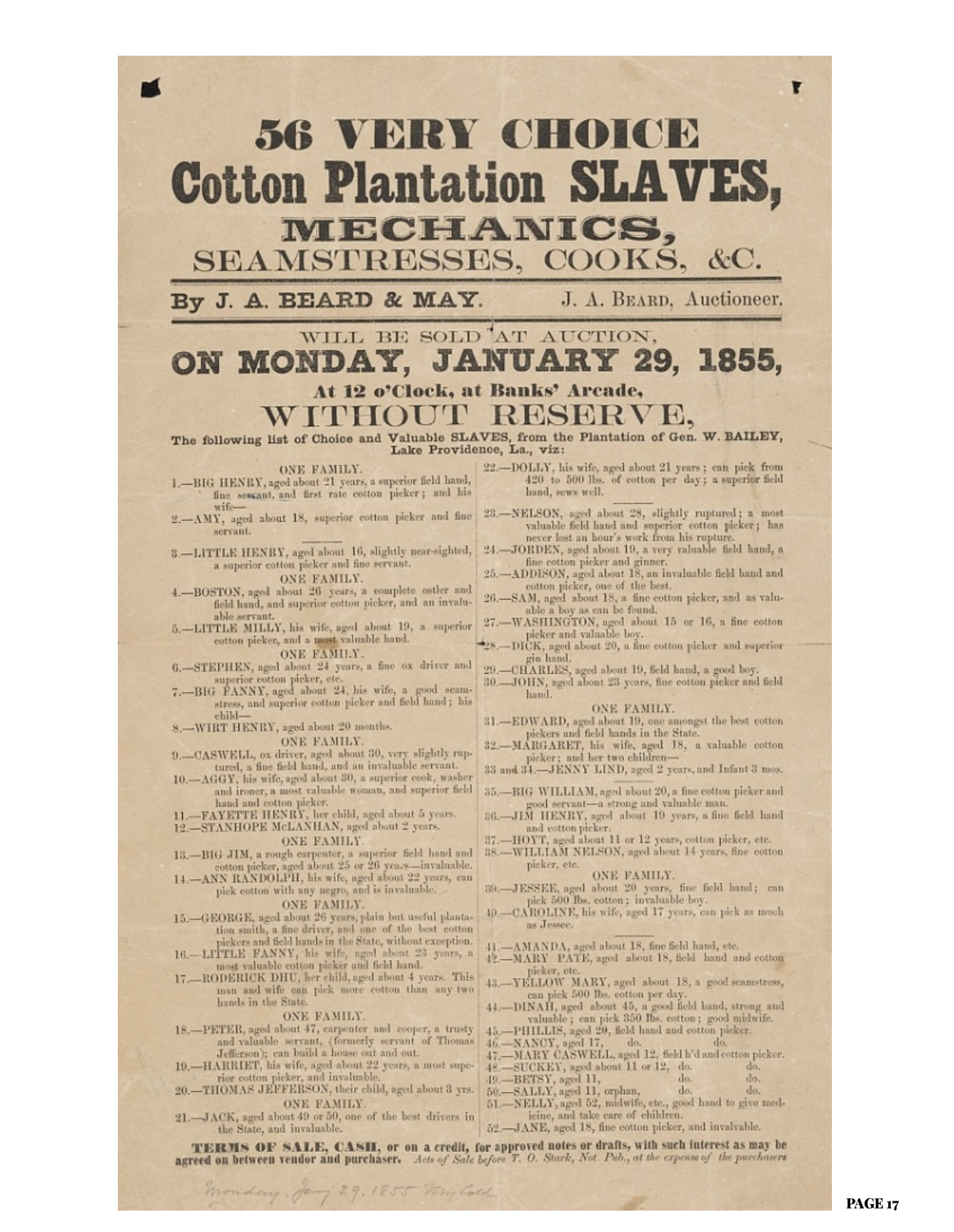
- 🖼️ Primary source analysis of two 1859 slave auction broadsides from Charleston and New Orleans
- 📖 Primary source excerpt from Solomon Northup's "Twelve Years a Slave" (1853)
- 🎥 Video chart activity using "The Weeping Time" (National Museum of African American History and Culture)
- 🌊 Reading and analysis on the Gullah Geechee people, their language, arts, and foodways
- 🧠 Comprehension questions, close reading prompts, and analytical writing throughout
📚 Students Will Learn About:
- 🔗 The domestic ("second Middle Passage") slave trade and how the cotton boom drove the forced migration of over one million enslaved people
- 💰 How the invention of the cotton gin transformed the scale and brutality of American slavery between 1830 and 1860
- 🏛️ The mechanics and trauma of the slave auction block in Charleston, Richmond, and New Orleans
- 😢 The 1859 "Weeping Time" auction in Savannah and its lasting significance
- ✍️ Solomon Northup's firsthand account of being sold in a New Orleans slave market
- 👨👩👧👦 How enslaved families, labor roles, and gender norms functioned differently from white Southern households
- 🌾 The distinct language, foodways, and cultural traditions of the Gullah Geechee people
🎯 Perfect For:
- ✔ AP African American Studies (Topics 2.5–2.6)
- ✔ 9th–12th Ethnic Studies, African American History, or U.S. History enrichment
- ✔ Black History Month or African American history lessons
- ✔ Primary and secondary source analysis
- ✔ Lessons exploring the domestic slave trade, slave auctions, and enslaved family and cultural life
📎 Formats:
✅ Ready-to-print PDF
✅ Class-ready in 15 minutes or less
✅ Download once. Use every year.
🖥️📝 LESSON 2.5–2.6 WORKSHEET PACKET PREVIEW:
...
To access the full worksheet packet, make a one-time purchase and own this resource for life!