
$2.22
📓 LESSON 2.8 – Notes
Lesson 2.8 Notes (PDF) — THE SOCIAL CONSTRUCTION OF "RACE"
Guide students through one of the most important ideas in African American Studies: race is a human-made system, not a biological fact. This guided notes slide deck for Unit 2 of the AP African American Studies course shows how racial categories were created alongside American slave societies, from the first race-based laws in colonial Virginia to partus sequitur ventrem and the one-drop rule. Students analyze primary sources, discuss PBS and Crash Course video segments, and work through an interactive timeline to see how law turned racial categories into a lasting system of inherited slavery.
📝 What's Included:
- ✅ 24-slide Guided Notes Slide Deck (PDF + printable)
- 🖥️ Link to Editable version (Google Slides)
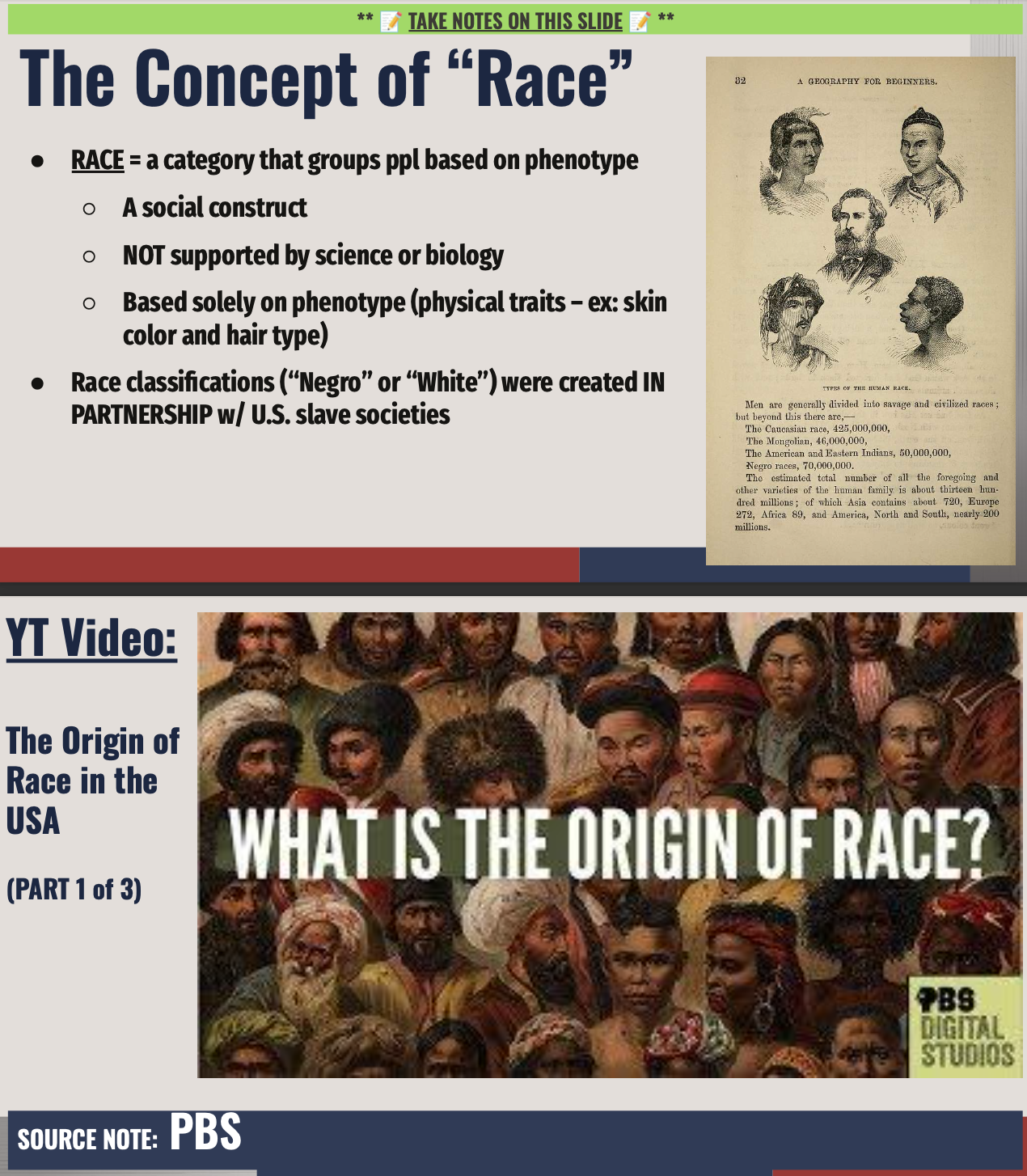
- 🎥 PBS's three-part video series "The Origin of Race in the USA," with discussion questions
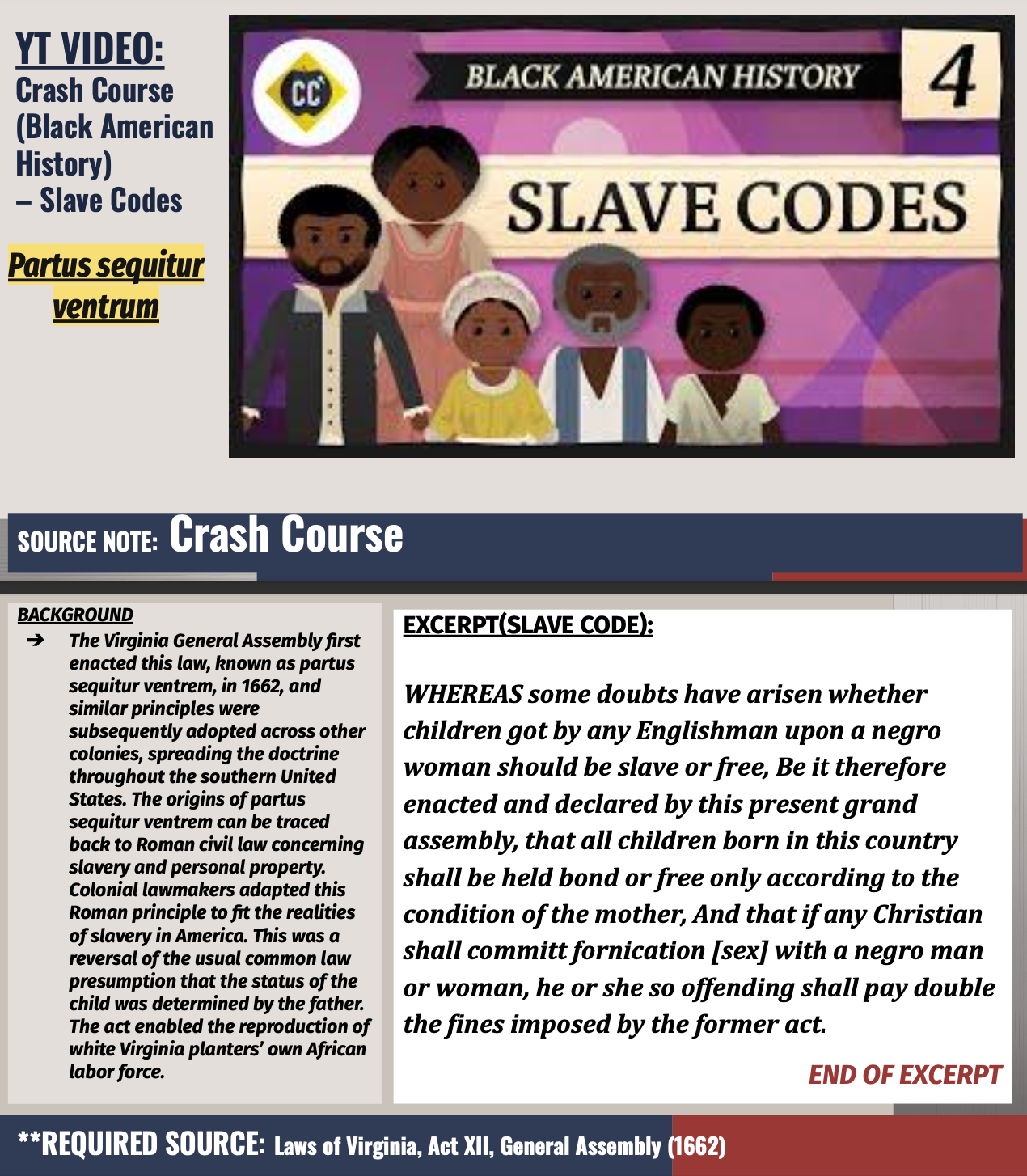
- 🎬 Crash Course Black American History video on slave codes and partus sequitur ventrem
- 📜 Primary source analysis of the Laws of Virginia, Act XII (1662), with background on Elizabeth Key's 1656 freedom suit
- 📰 Primary source analysis of "Am I Not a Woman and a Sister?" from The Liberator (1849)
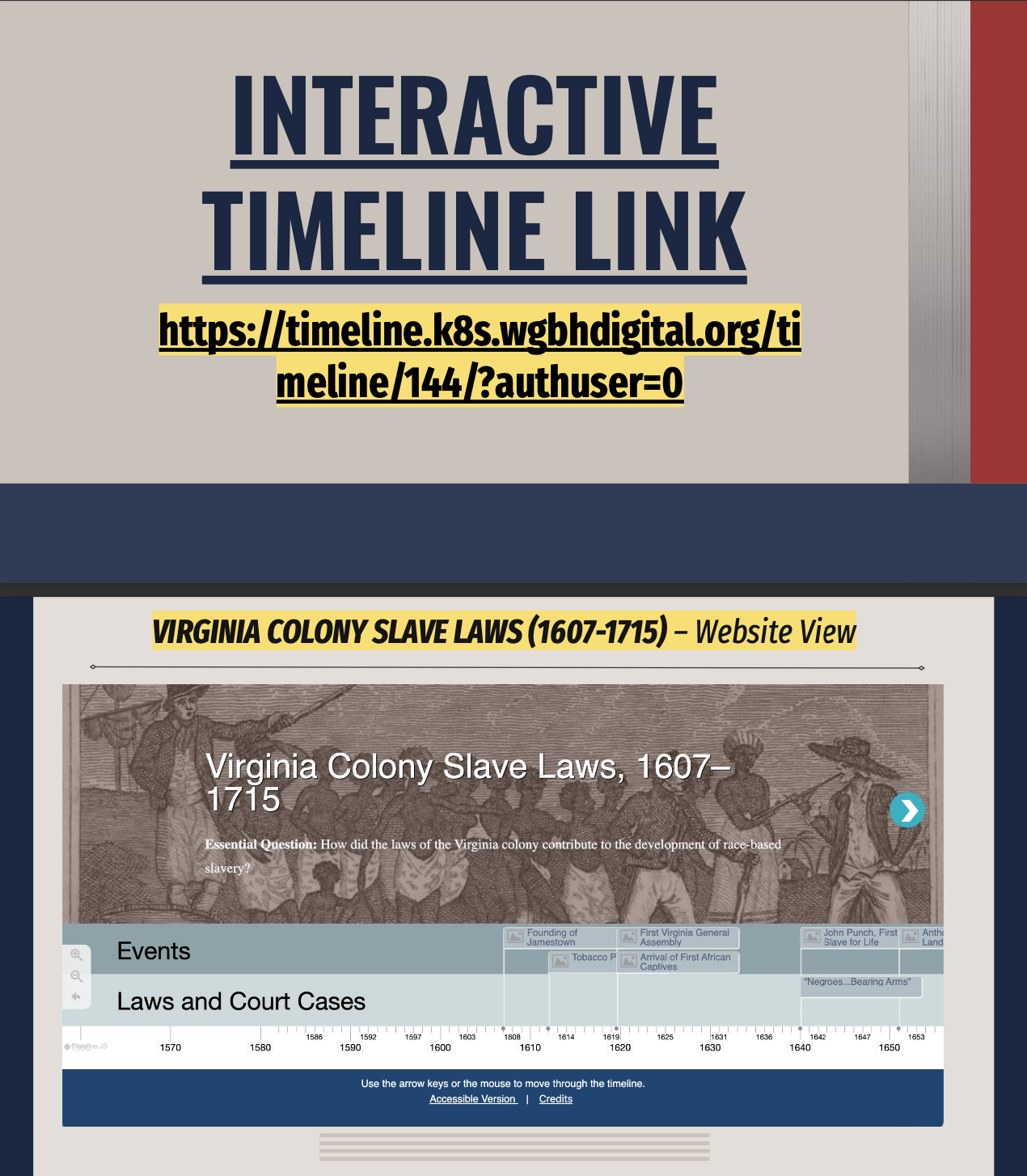
- 🗓️ Interactive timeline activity on Virginia colony slave laws (1607–1715), with a guided chart
- 🧠 Guided note-taking and source analysis prompts throughout
📚 Students Will Learn About:
- 🔬 How race is defined as a social construct based on phenotype and not supported by science or biology
- ⚖️ How hypodescent and the "one-drop rule" determined legal race in the pre-Civil War era
- 🏛️ How the arrival of the first Africans in Virginia in 1619 led to new race-based laws in the 1620s and 1640s
- 👶 Partus sequitur ventrem (1662) and how it made slavery hereditary through the mother's status
- 👩🏾⚖️ How Elizabeth Key's successful freedom suit shaped the colonial legal response
- 👨👩👧 The impact of partus sequitur ventrem on Black families and on the commodification of Black childbirth
- ✊🏾 How abolitionist print culture used The Liberator to challenge white readers' views of enslaved Black women
- 💡 How the Enlightenment was used to create and justify racial categories
🎯 Perfect For:
- ✔ AP African American Studies (Topic 2.8)
- ✔ 9th–12th Ethnic Studies, African American History, or U.S. History enrichment
- ✔ Black History Month or African American history lessons
- ✔ Primary source analysis and legal history connections
- ✔ Lessons exploring the social construction of race and its legal roots in colonial America
📎 Formats:
✅ Ready-to-print PDF
✅ Includes link to Editable Google Slide Deck
✅ Class-ready in 15 minutes or less
✅ Download once. Use every year.
🖥️📝 LESSON 2.8 NOTES PREVIEW:

...
To view and edit the full slide deck, make a one-time purchase and own these documents for life!