
Starting from:
$2.22
📄 LESSON 2.9-2.10 – Packet
Lesson 2.9–2.10 Worksheet Packet (PDF) — CREATING AFRICAN-AMERICAN IDENTITY & CULTURE
Explore the birth of a distinct African American culture with this 10-page worksheet packet for Unit 2 of the AP African American Studies course. Topics 2.9–2.10 trace the origins of Black musical traditions, artistic expression, and the evolving question of racial self-naming — using spirituals, firsthand slave narratives, material culture, and 19th-century newspaper debates to show how enslaved and free Black Americans forged identity and resistance through culture.
📝 What's Included:
- ✅ 10-page student worksheet packet (PDF + printable)
- 🖥️ Link to Editable version (Google Docs)
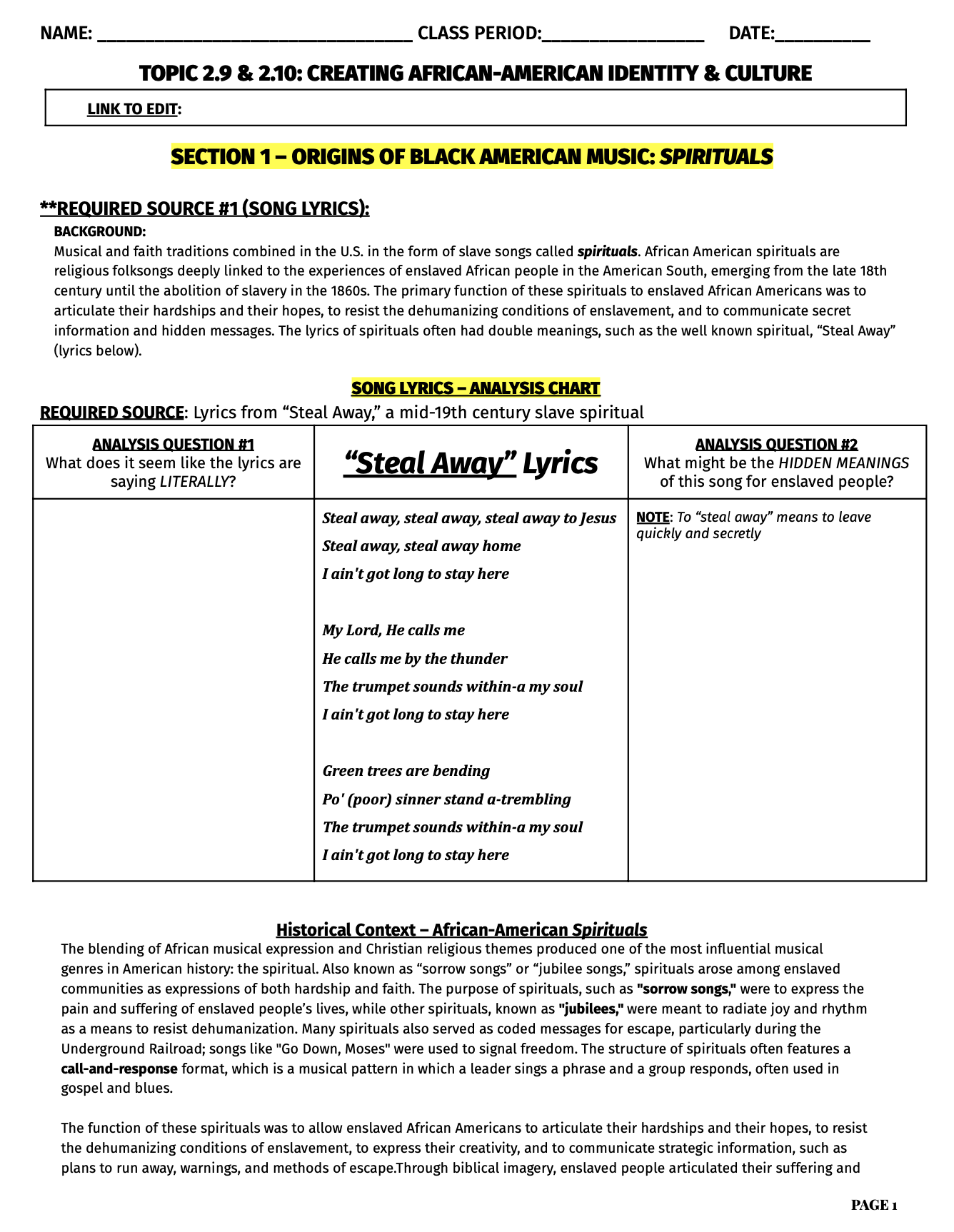
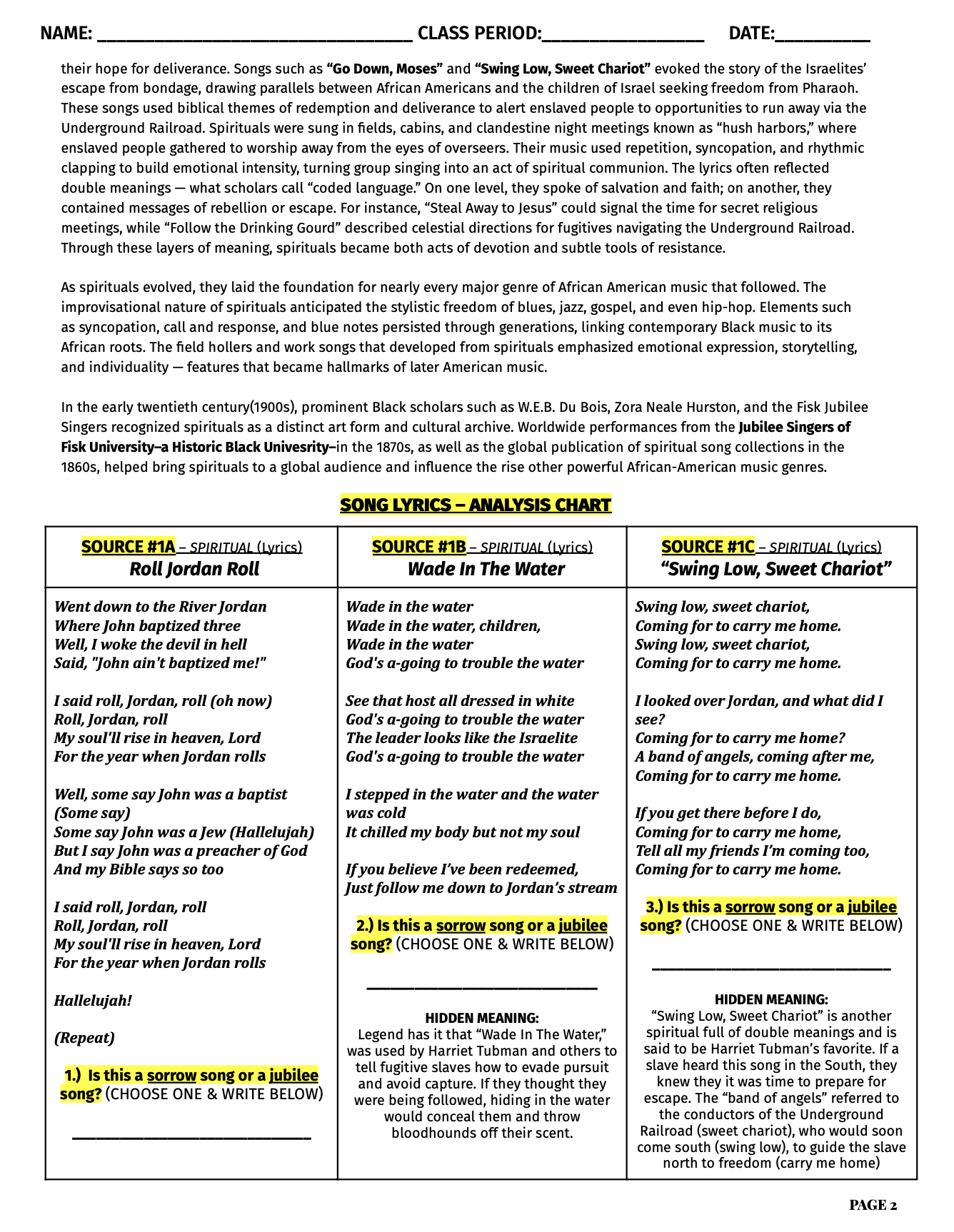
- 🎵 Primary source analysis of African American spirituals, including "Steal Away," "Roll Jordan Roll," "Wade in the Water," and "Swing Low, Sweet Chariot"
- 📖 Primary source excerpt from Frederick Douglass's "My Bondage and My Freedom" (1855)
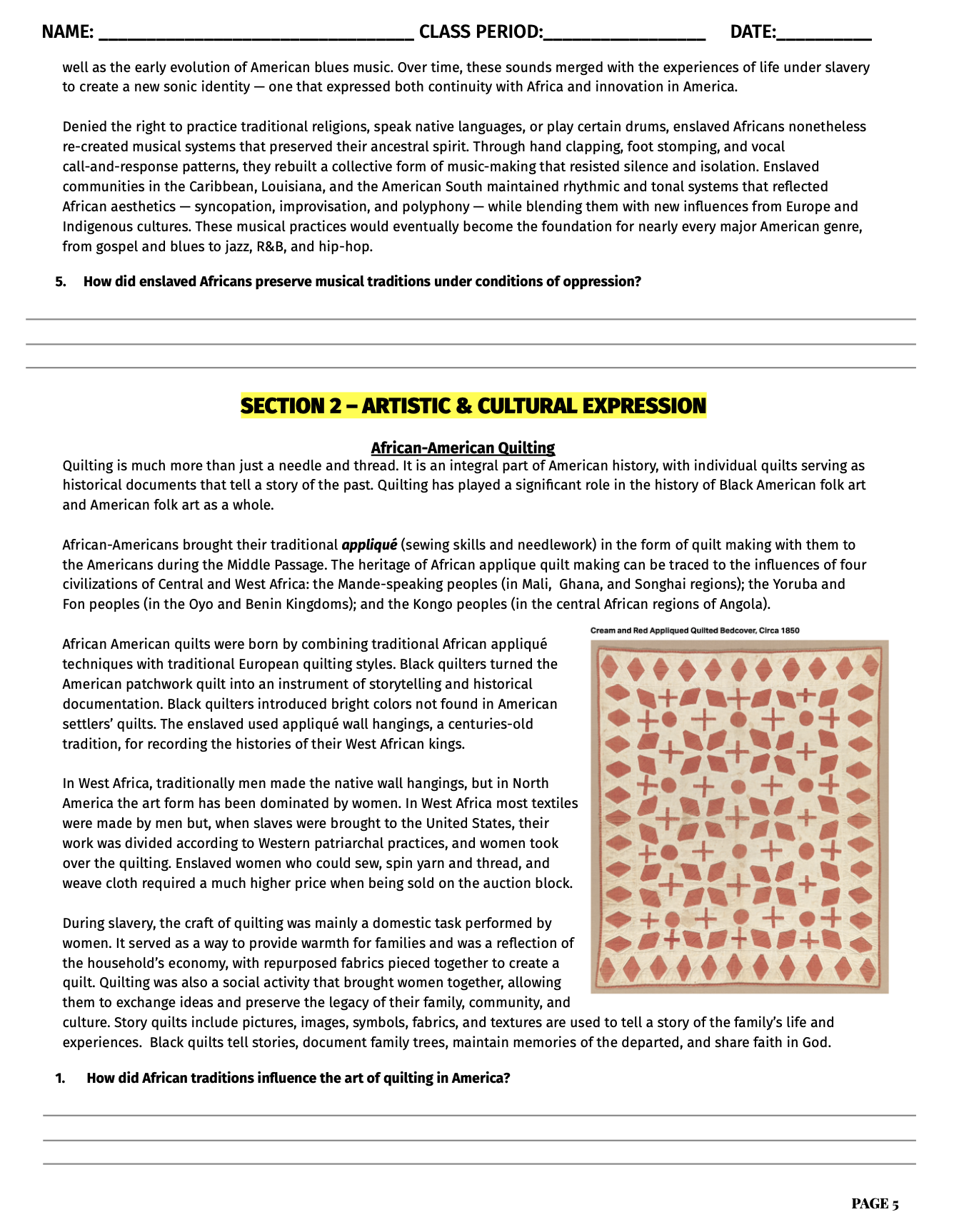
- 🎨 Reading on the African roots of African American quilting traditions
- 🏺 Primary source analysis of a storage jar by enslaved potter and poet David Drake (1858), using the H.I.P.P. method
- 📰 Primary source newspaper excerpts (1828–1841) debating Black self-naming and identity, including Freedom's Journal, The Liberator, and The Colored American
- 🧠 Comprehension questions, song lyric analysis, and H.I.P.P. source analysis throughout
📚 Students Will Learn About:
- 🎶 How spirituals like "Steal Away" and "Wade in the Water" carried hidden meanings and coded messages for escape via the Underground Railroad
- ✍️ Frederick Douglass's reflection on the true sorrowful meaning behind enslaved people's songs
- 🪕 The West and Central African musical roots — rhythm, call-and-response, and tonal systems — that laid the foundation for blues, jazz, gospel, and hip-hop
- 🧵 How enslaved African Americans adapted African appliqué traditions into American quilting as a form of storytelling and historical documentation
- 🏺 David Drake ("Dave the Potter"), an enslaved South Carolina artisan whose inscribed poetry defied literacy bans and asserted his humanity
- 🗣️ How the decline of the African-born population and the rise of the American Colonization Society shaped 19th-century debates over Black self-naming
- 📰 How terms like "African," "Colored," and "Afro-American" reflected shifting political and cultural tensions around Black identity and belonging
🎯 Perfect For:
- ✔ AP African American Studies (Topics 2.9–2.10)
- ✔ 9th–12th Ethnic Studies, African American History, or U.S. History enrichment
- ✔ Black History Month or African American history lessons
- ✔ Primary source analysis, music history, and identity studies
- ✔ Lessons exploring African American cultural origins and the politics of racial naming
📎 Formats:
✅ Ready-to-print PDF
✅ Class-ready in 15 minutes or less
✅ Download once. Use every year.
🖥️📝 LESSON 2.9–2.10 WORKSHEET PACKET PREVIEW:
...
To access the full worksheet packet, make a one-time purchase and own this resource for life!